1387Likes
Tamiya TT02 Thread
 03-15-2022 | 03:39 PM
#3151
Tech Adept
Joined: Nov 2021
Posts: 133
From: Central Florida

I've read about water-dipping motors to wear in the brushes to the comm. But the water is only for the brushes, so I figured why dip the whole thing? Have some syringes I use for precision stuff, so I filled one with RO water, and the other with 99% Isopropanol Alcohol.
I actually compared this to a silver can that I just threw in and ran. The comm on that one is scored and nasssssty. Might try it on that one and post a before and after.
I run it on a single AA, and use Labelle 106 on the bushings. Couple drops of water on the comm and it starts to work its magic. As it starts to drag running voltage down follow with alcohol to clear the worn brush material. Repeat until the brushes are about 90% worn in, final squirt of alcohol followed by compressed air. re-lube bushings and run.
Wow. It feels smoother, maybe even more responsive I'd dare to say. Who knows, but it seems like a strong little motor.
And as for the final comment; Yes, a mess it is.
 03-15-2022 | 08:31 PM
#3152


The water method is good for original silver can. The torque and sport tune have much softer brushes.. if you submerge them, they will be done for.. just a simple flash or squirt is enough to break them in
03-16-2022 | 09:32 AM
#3154

 03-16-2022 | 12:22 PM
#3156
Tech Adept
Joined: Nov 2021
Posts: 133
From: Central Florida
Definitely a benefit to doing it but what I have read leads me to believe most who attempt it don't do it properly and get bad results.
But with it used widely in the RC scene many years ago says it did something lol.
03-17-2022 | 02:22 PM
#3158
Joined: Aug 2001
Posts: 7,664
I prefer 64P gears and my gearing is 75/51 that gives an FDR of 3.82 and post #3008 shows that I had to mod the stock gear cover to make clearance for the pinion. I later found a local guy who printed me a new cover that I have since installed.
 03-18-2022 | 11:06 PM
#3160

Yes within 30 seconds of adding the water to the brushes they wore in rather quickly, hence the alternating between water and alcohol.
Definitely a benefit to doing it but what I have read leads me to believe most who attempt it don't do it properly and get bad results.
But with it used widely in the RC scene many years ago says it did something lol.
Definitely a benefit to doing it but what I have read leads me to believe most who attempt it don't do it properly and get bad results.
But with it used widely in the RC scene many years ago says it did something lol.
Regarding brush debris: Submerging the motor in water allows brush debris to be washed away instantly by the churning water inside the motor, whereas applying a few drops of water directly to the brushes just causes the debris to form a grinding paste that stays on the brushes. That's why the brushes broke-in so quickly for you. If it works, it works, but there's a significant risk of the brushes being damaged by so much abrasive material in such a small area.
(source for magnetic flux explanation: John Rob Holmes of Holmes Hobbies LLC)
Last edited by fyrstormer; 03-18-2022 at 11:17 PM.
03-19-2022 | 06:56 PM
#3161
Tech Initiate
Joined: Sep 2009
Posts: 27
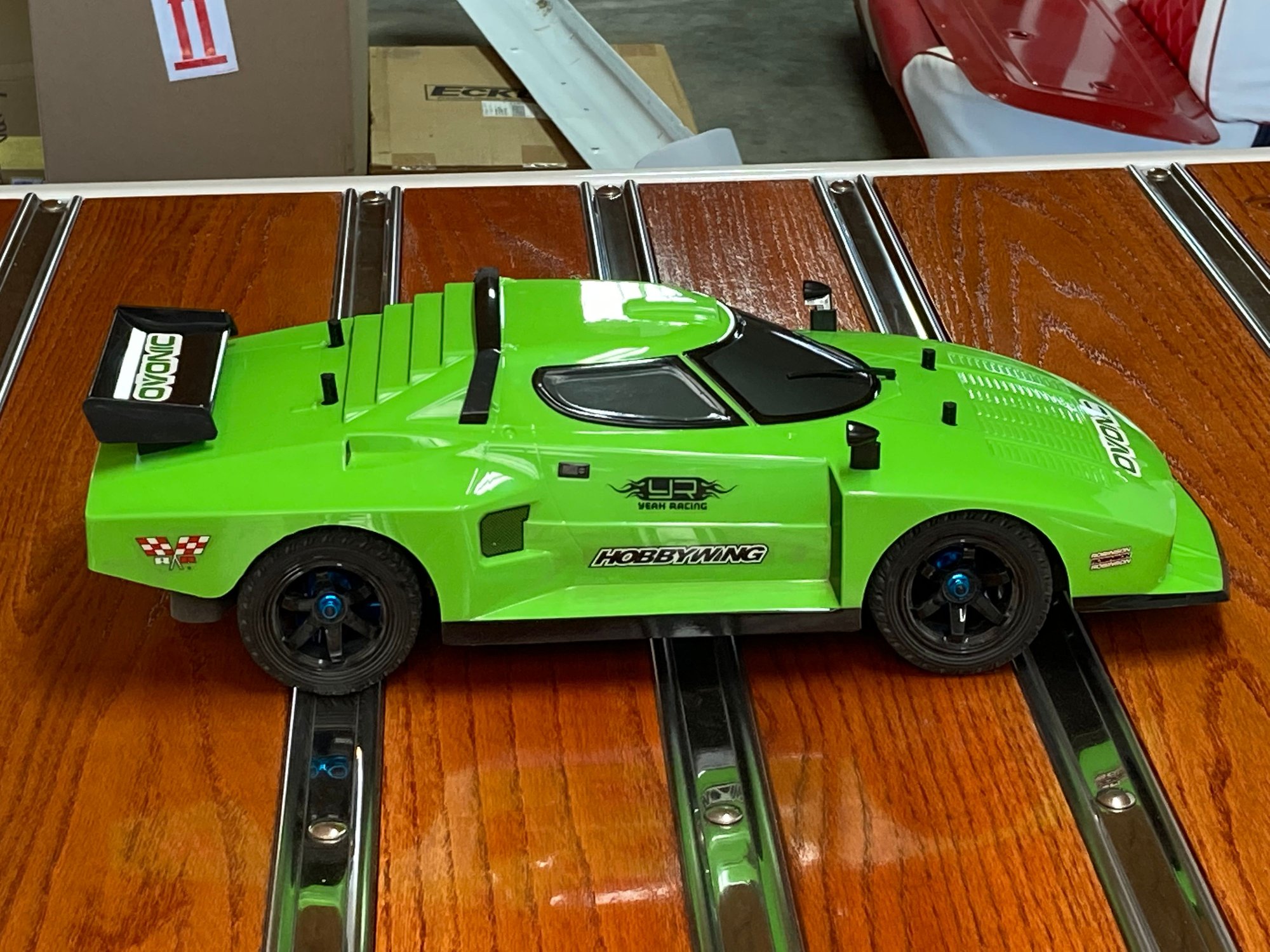
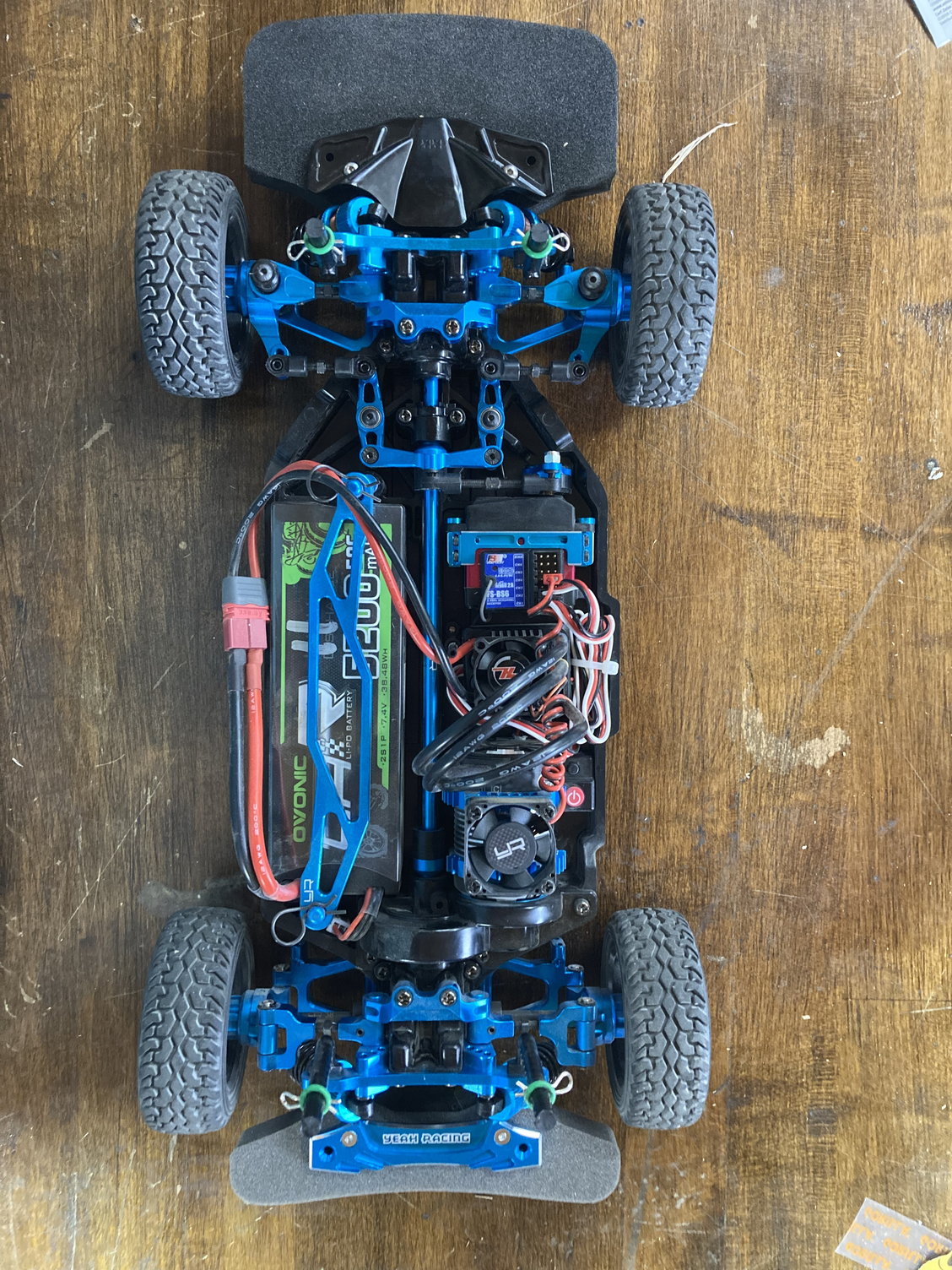
Here's my 2nd run. Found a nice dusty parking lot. She feels quicker here than at home. Also, forgive the crash. Distracted and driving with one hand. Don't drive distracted.
Still the same setup. 23-turn motor, stock ESC, 20t pinion, 68t spur.
Still the same setup. 23-turn motor, stock ESC, 20t pinion, 68t spur.
 03-23-2022 | 10:36 AM
#3164
Tech Adept
Joined: Nov 2021
Posts: 133
From: Central Florida
The main purpose of submerging a motor during a wet break-in is to subject the motor to significant drag, so the motor will have to work extremely hard for an extended period of time. The significant drag limits the motor's speed, which reduces the magnetic flux inside the can. The reduced magnetic flux is unable to generate as much inductive resistance in the armature coils as it normally would if the motor were spinning freely. The lower resistance allows the battery to push more amperage through the motor, and because that amperage is being pushed through a very tiny contact area between the brand-new brushes and the commutator, the contacting surfaces of the brushes get extremely hot and start to disintegrate. This accelerates the break-in process by an order of magnitude -- but it can also destroy soft brushes in a matter of seconds, as I and many other people have discovered over the years. A wet break-in is only useful (or safe) for motors with extremely hard brushes that would take an extremely long time to break-in without the continuous drag of running underwater. For brushed motors with softer brushes, a few full-throttle accelerations will put enough load on the motor to break-in the brushes, and then the commutator can be cleaned with electronics cleaner spray.
Regarding brush debris: Submerging the motor in water allows brush debris to be washed away instantly by the churning water inside the motor, whereas applying a few drops of water directly to the brushes just causes the debris to form a grinding paste that stays on the brushes. That's why the brushes broke-in so quickly for you. If it works, it works, but there's a significant risk of the brushes being damaged by so much abrasive material in such a small area.
(source for magnetic flux explanation: John Rob Holmes of Holmes Hobbies LLC)
Regarding brush debris: Submerging the motor in water allows brush debris to be washed away instantly by the churning water inside the motor, whereas applying a few drops of water directly to the brushes just causes the debris to form a grinding paste that stays on the brushes. That's why the brushes broke-in so quickly for you. If it works, it works, but there's a significant risk of the brushes being damaged by so much abrasive material in such a small area.
(source for magnetic flux explanation: John Rob Holmes of Holmes Hobbies LLC)
The one I wore in by a few full throttle runs destroyed the comm. It was toast even after cleaning it off. Chunks of brush missing and comm scored to hell.
I'm extremely familiar with motors and electronics, I used to repair Telecom Infrastructure Boards from across the US and most of the world. The company I worked for also had a DJI drone repair department.
I can swap motors out and compare the two back to back in the same TT02. Whenever I get around to it lol.