


SC10 Thread
 10-02-2011 | 10:41 AM
#7396
Tech Regular
iTrader: (2)
Joined: Dec 2010
Posts: 367

The way I learned was I had a friend that is very knowledgeable build one of mine. He handed it to me and said this is how it should feel. Then he made it too loose and too tight. He said anything in between is where you want to be. I basically just figured out the rest.
I think the hardest thing to learn was knowing when it was just right. Once you have that, its easy. Just adjust to get to that point.
I think the hardest thing to learn was knowing when it was just right. Once you have that, its easy. Just adjust to get to that point.
 10-02-2011 | 10:43 AM
#7397
Tech Regular
iTrader: (2)
Joined: Dec 2010
Posts: 367
Im sure this has been asked before, but I couldnt find it in the million pages of info.
will the sealed reciever box from the new RS Sc10 fit right into my FT chassis?
Also, I have the ProLine hex conversion. Is there any benefit to going with the AE hex setup?
will the sealed reciever box from the new RS Sc10 fit right into my FT chassis?
Also, I have the ProLine hex conversion. Is there any benefit to going with the AE hex setup?
10-02-2011 | 10:48 AM
#7398

Some people say the proline kit is sloppy or loose,I have the proline kit with no issues
10-02-2011 | 10:51 AM
#7399

The way I learned was I had a friend that is very knowledgeable build one of mine. He handed it to me and said this is how it should feel. Then he made it too loose and too tight. He said anything in between is where you want to be. I basically just figured out the rest.
I think the hardest thing to learn was knowing when it was just right. Once you have that, its easy. Just adjust to get to that point.
I think the hardest thing to learn was knowing when it was just right. Once you have that, its easy. Just adjust to get to that point.
10-02-2011 | 11:11 AM
#7400

Tech Legend

Joined: Aug 2001
Posts: 22,595
From: TRCR Modified Driver
Won't make a bit of difference if its your first race .
With time however , your skills will demand a ball diff as it delivers the best racing performance & traction compared to a gear diff..
With time however , your skills will demand a ball diff as it delivers the best racing performance & traction compared to a gear diff..
10-02-2011 | 01:32 PM
#7401

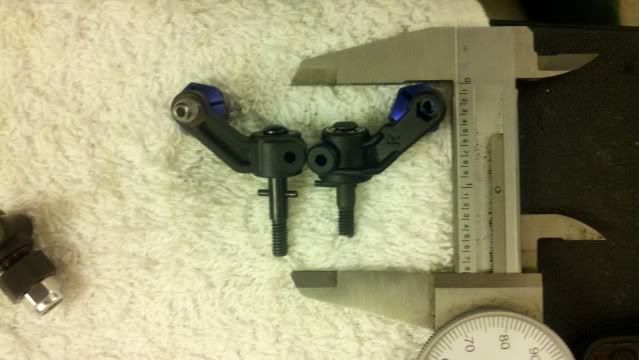
I have both axles in front of me right now.
The Proline plastic is smaller flange to flange, it measures .395".
The AE plastic is larger flange to flange, it measures .472, the extra material making the hub wider.
The Proline axle is longer, 1.280".
The AE axle is shorter, 1.180". From the back flange to the roll pin is about .050 smaller too.
The AE axle has an c clip behind the outside bearing. When you tighten the wheel, the 12mm hub clamps the bearing between itself and the C clip, turning the inner bearing race into a crush sleeve. The Proline kit has nothing in there to keep the bearing from crushing itself, except for the outer hub making contact with the roll pin. One might be inclined to space the out of the Proline kit to make the front end wider by adding shims between the outer bearing and the 12mm hub. Take my advice (for what it's worth):
Don't. It won't turn free and it will destroy the bearings in a single race day.
My observation is the weakness on all these 12mm conversions is the lack of a crush spacer. The hinge pin runs right through the middle of the axle (that's what the relief in the middle of the axle is for) so there's no room for it.
You can chuck up a Jconcepts wheel on an AE axle with a Jconcepts hex installed. Retaining the roll pin will becomes the problem, because it's no longer captured by the hex. You could CA them in, it's might not be pretty, but it will work.
Here is a picture. The longer one on the left is the Proline unit:
The Proline plastic is smaller flange to flange, it measures .395".
The AE plastic is larger flange to flange, it measures .472, the extra material making the hub wider.
The Proline axle is longer, 1.280".
The AE axle is shorter, 1.180". From the back flange to the roll pin is about .050 smaller too.
The AE axle has an c clip behind the outside bearing. When you tighten the wheel, the 12mm hub clamps the bearing between itself and the C clip, turning the inner bearing race into a crush sleeve. The Proline kit has nothing in there to keep the bearing from crushing itself, except for the outer hub making contact with the roll pin. One might be inclined to space the out of the Proline kit to make the front end wider by adding shims between the outer bearing and the 12mm hub. Take my advice (for what it's worth):
Don't. It won't turn free and it will destroy the bearings in a single race day.
My observation is the weakness on all these 12mm conversions is the lack of a crush spacer. The hinge pin runs right through the middle of the axle (that's what the relief in the middle of the axle is for) so there's no room for it.
You can chuck up a Jconcepts wheel on an AE axle with a Jconcepts hex installed. Retaining the roll pin will becomes the problem, because it's no longer captured by the hex. You could CA them in, it's might not be pretty, but it will work.
Here is a picture. The longer one on the left is the Proline unit:
10-02-2011 | 05:39 PM
#7402
Tech Regular
iTrader: (2)
Joined: Dec 2010
Posts: 367
my Proline hex conversion felt sloppy after a few days. I raised the concern with the ProLine guys when they were here for a race last year. They gave me a shitty attitude about it, like Im an idiot for complaining about "wear" on RC stuff. The problem is it got sloppy after about 4-5 packs. It seems like the knuckles get rounded out. I wonder if this is why they sell replacement knuckles by themselves now.
for the record, it wasnt Gerrardo, he's always been really cool and willing to help out.
thanks for the re-post.
for the record, it wasnt Gerrardo, he's always been really cool and willing to help out.
thanks for the re-post.
10-02-2011 | 06:56 PM
#7403

Tech Apprentice
Joined: Sep 2011
Posts: 58
From: Southern WI
My family was also involved in Offroad Short course in the Midwest for many years. I have not found much of my full scale experience apply to my SC10 but the general stuff like which line to take on the track or general suspension set-ups may apply some. My kids prefer the RC version cause it is safer in their eyes.
 10-02-2011 | 09:23 PM
#7404

Tech Adept
Joined: Dec 2010
Posts: 112
From: tiffin ohio
the rs receiver box fits perfect! just put one on my ft sc10
10-03-2011 | 07:17 AM
#7405
Tech Addict
iTrader: (2)
Joined: Oct 2008
Posts: 516
Just wondering how much weight you guys are adding to the sc10's and where are you putting it mostly? Im running a tight track with lots of jumps, power means nothing but getting it hooked up coming out of the corners is evreything.
10-03-2011 | 07:25 AM
#7406

Tech Master
Joined: Feb 2010
Posts: 1,192
From: São Paulo, Brazil
- F Ballast (0.7 oz) between front hinge pin brace and trans
- 1.5 oz. added int he back of the battery tray
- 0.5 oz. near reciever to counterbalance the ESC.
This works great for me with the 8.5 or 17.5 motor. It balances the chassis and helps to reduce body role with the proper shock settings. When you add weight you need to increase shock damping and spring rates. I still have adjustments with the LIPO in the battery tray to help with tuning for track surfaces. high bite I place the battery forward. On lower traction surfaces I need to shift the weight back.
10-04-2011 | 01:09 PM
#7407

Tech Addict
Joined: Aug 2010
Posts: 623
From: Tempe, AZ
I'm just wondering everyone's opinions on any changes to make to a brushless RTR to be a good racer.
It's completley stock.
Are there any adjustments I should make and what option parts and upgrades would be good?
Any advice really helps
Thanks!
Zac
It's completley stock.
Are there any adjustments I should make and what option parts and upgrades would be good?
Any advice really helps
Thanks!
Zac
 10-04-2011 | 02:00 PM
#7409

Tires are the biggest thing. I'm a huge fan of AKA tires so I'd recommend picking up a few different types depending on the tracks you run at. Soft Gridirons seem to be the most universal.
Not necessary by any means, but since you are just starting out it would be a good idea to decide if you want to convert to hexes before starting your tire collection.
I ran the original team kit for a long time with many wins. There really aren't any necessary upgrades.
10-04-2011 | 05:05 PM
#7410
I have added ~3 oz.
- F Ballast (0.7 oz) between front hinge pin brace and trans
- 1.5 oz. added int he back of the battery tray
- 0.5 oz. near reciever to counterbalance the ESC.
This works great for me with the 8.5 or 17.5 motor. It balances the chassis and helps to reduce body role with the proper shock settings. When you add weight you need to increase shock damping and spring rates. I still have adjustments with the LIPO in the battery tray to help with tuning for track surfaces. high bite I place the battery forward. On lower traction surfaces I need to shift the weight back.
- F Ballast (0.7 oz) between front hinge pin brace and trans
- 1.5 oz. added int he back of the battery tray
- 0.5 oz. near reciever to counterbalance the ESC.
This works great for me with the 8.5 or 17.5 motor. It balances the chassis and helps to reduce body role with the proper shock settings. When you add weight you need to increase shock damping and spring rates. I still have adjustments with the LIPO in the battery tray to help with tuning for track surfaces. high bite I place the battery forward. On lower traction surfaces I need to shift the weight back.