


 59Likes
iCharger DX8



 11-04-2022 | 06:47 AM
#92


Does anyone know if this can perform the function of a variable voltage power supply? I was able to do it with the X6, but can't remember how. I know the 308, 406, 4010 are not able to do this, so I want to verify that the DX8 can. Also, has anyone tried out any of the custom cases for these, or any icharger? IF so, thoughts on them...
11-21-2022 | 02:45 PM
#93

 FW download.
Does anyone know where to download the latest FW? A friend of mine bought one, and it came with fW 1.08, but on the Junsi console, it can only find v1.06 online.
Last edited by Eddie M; 11-21-2022 at 03:49 PM.
01-01-2023 | 07:23 PM
#94
Tech Adept
Joined: May 2012
Posts: 119
Setting up my DX8 charger profiles and need some conformation that they look good. I made a 1C and 2C charging profile. These seem like safe charging ranges but if I'm wrong please let me know. These are my first lipo batteries.
The batteries are Protek 2s 4800mah. The Balance Charge is selected also on both profiles.
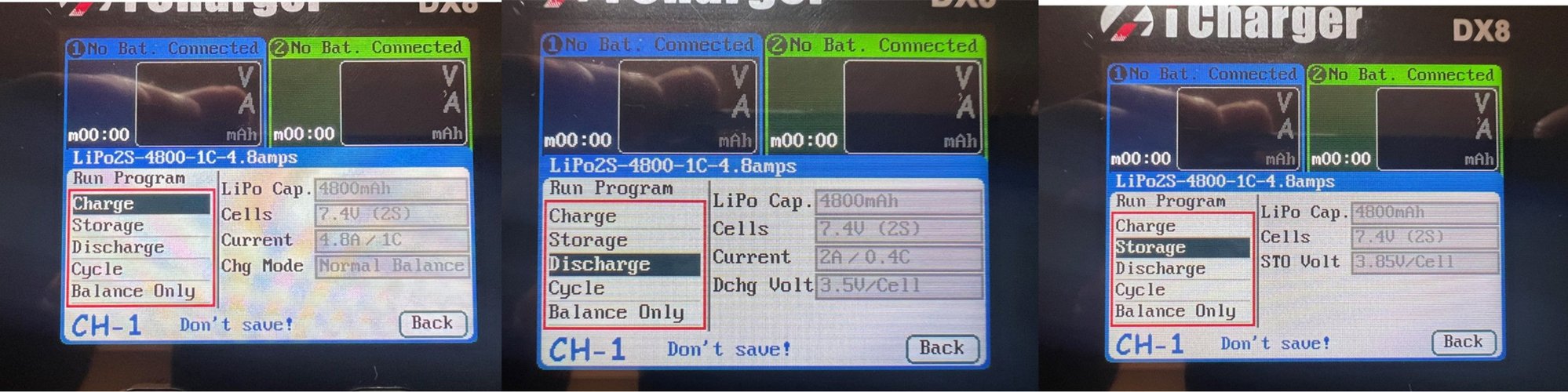
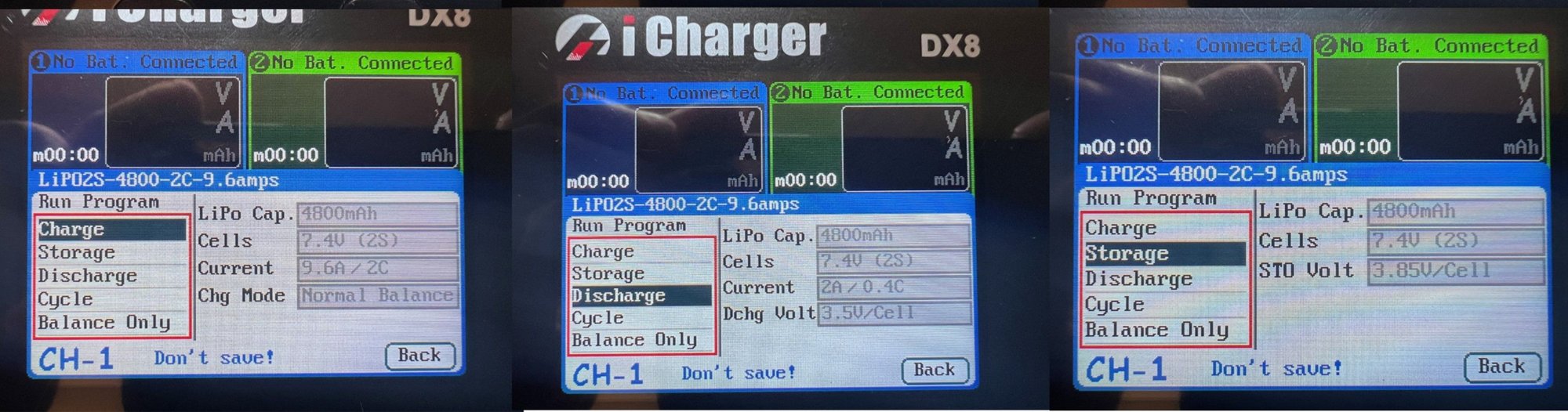
The batteries are Protek 2s 4800mah. The Balance Charge is selected also on both profiles.
01-02-2023 | 06:29 AM
#95
 01-06-2023 | 09:08 PM
#96
Tech Adept
Joined: May 2012
Posts: 119
Got my charge cables and just plugged in the batteries. (Nervous about charging the batteries after seeing all the horror stories) I noticed the mV numbers are different. Is this just the difference between cells? Seems like it
I have not charged a battery yet. Tomorrow ill charge them up outside.

I have not charged a battery yet. Tomorrow ill charge them up outside.
Last edited by edman4523; 01-06-2023 at 09:49 PM.
01-07-2023 | 02:51 AM
#97
Got my charge cables and just plugged in the batteries. (Nervous about charging the batteries after seeing all the horror stories) I noticed the mV numbers are different. Is this just the difference between cells? Seems like it
I have not charged a battery yet. Tomorrow ill charge them up outside.
I have not charged a battery yet. Tomorrow ill charge them up outside.
Don't worry too much, If you follow some basic precautions, you'll be fine. Yes, these LiPo horror stories exist and bad things have happened with them. But compared to "all the stories", think how often thousands upon thousands of LiPos are charged around the world each moment, and you'll never hear anything, because nothing happened.
01-07-2023 | 12:15 PM
#98
Tech Adept
Joined: May 2012
Posts: 119
Here are a few photos of my first time charging a lipo battery. Its a 4800mAh battery.
The battery started charging @9.6amps which is what I had set it at. But as it got closer to being fully charged the amps dropped down to .8amps. The drop happened in the last 10mins of charging. Is this because of the balance charging?
I did not discharge the battery before I charged it. Looks like I should have done that as it a 4800mAh battery and it only got to 2988mAh.
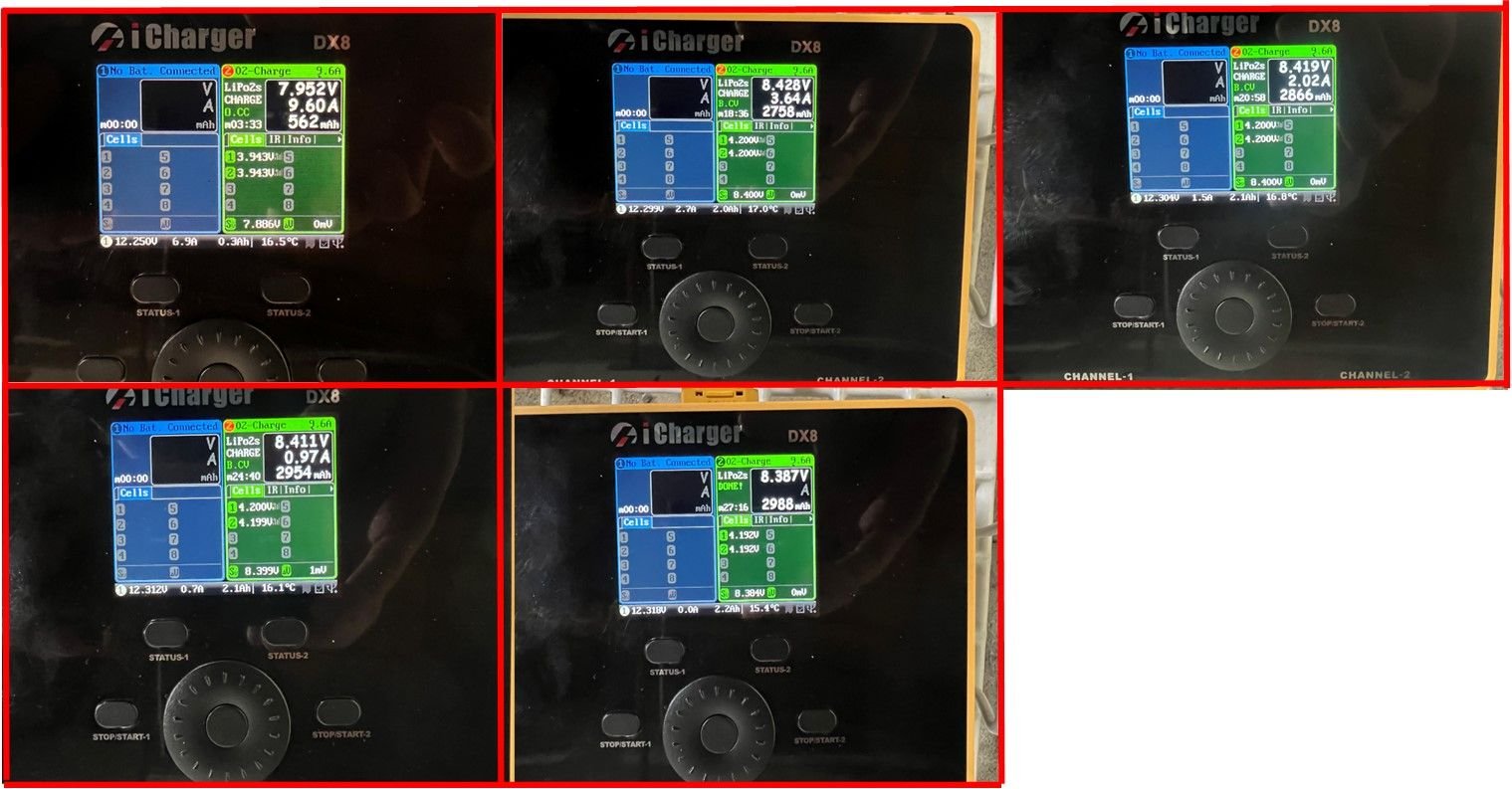
The battery started charging @9.6amps which is what I had set it at. But as it got closer to being fully charged the amps dropped down to .8amps. The drop happened in the last 10mins of charging. Is this because of the balance charging?
I did not discharge the battery before I charged it. Looks like I should have done that as it a 4800mAh battery and it only got to 2988mAh.
01-08-2023 | 03:42 AM
#99
Yes, it's normal and yes, it's the balancing. And no, you don't need to discharge before charging.
In fact, LiPos should never be stored fully charged or fully discharged, but in a certain voltage range, called "storage voltage" - that's what your battery was at (they are sold like that), so of course it needed less than 4800 to get to a full charge, since it wasn't really empty. In fact you must never run a LiPo below 3.0V per cell at all, some say even 3.2V with today's HV cells - otherwise you can easily damage or destroy you battery. If you want to treat your batteries a little better, set your personal limit even higher (~3.5V). Most modern ESCs have a setting at which they will either become noticeably slower or immediately stop running at a certain voltage. I always set mine relatively high, so I never end up with less than 3.5 or 3.6V per cell. Unlike NiCd, LiPos also have no memory effect, so you basically never need to discharge them below storage voltage at all. (What some people do - not saying you should! - is a full cycle, they discharge and immediately charge the battery again, both with very high Amps (20-40, possibly up to 70), which will heat up the battery internally, which lowers it's internal resistance (IR) and supposedly brings a tiny bit more performance for stock class racing - but at the cost of battery life, and some people say safety as well, so I don't recommend you do that.)
But all this is pretty much basic LiPos knowledge. If you didn't know any of it until now, you should better start reading up about LiPo care quickly, or watch some video tutorials, because without basic knowledge, you can and likely will damage your batteries - and what damaged LiPos can do... well, you've already heard. They're only safe if treated correctly!
In fact, LiPos should never be stored fully charged or fully discharged, but in a certain voltage range, called "storage voltage" - that's what your battery was at (they are sold like that), so of course it needed less than 4800 to get to a full charge, since it wasn't really empty. In fact you must never run a LiPo below 3.0V per cell at all, some say even 3.2V with today's HV cells - otherwise you can easily damage or destroy you battery. If you want to treat your batteries a little better, set your personal limit even higher (~3.5V). Most modern ESCs have a setting at which they will either become noticeably slower or immediately stop running at a certain voltage. I always set mine relatively high, so I never end up with less than 3.5 or 3.6V per cell. Unlike NiCd, LiPos also have no memory effect, so you basically never need to discharge them below storage voltage at all. (What some people do - not saying you should! - is a full cycle, they discharge and immediately charge the battery again, both with very high Amps (20-40, possibly up to 70), which will heat up the battery internally, which lowers it's internal resistance (IR) and supposedly brings a tiny bit more performance for stock class racing - but at the cost of battery life, and some people say safety as well, so I don't recommend you do that.)
But all this is pretty much basic LiPos knowledge. If you didn't know any of it until now, you should better start reading up about LiPo care quickly, or watch some video tutorials, because without basic knowledge, you can and likely will damage your batteries - and what damaged LiPos can do... well, you've already heard. They're only safe if treated correctly!
02-06-2023 | 05:46 PM
#101
Tech Adept
Joined: May 2012
Posts: 119
I want to setup a 20amp charging profile. When I enter 20 amps under setup it is giving me a warning. Am I doing something wrong or is it just telling me caution?
The caution shows up at 14.9 - 30 amps. I've only been charging at 9.6 amps. Just want to make sure all is good.

The caution shows up at 14.9 - 30 amps. I've only been charging at 9.6 amps. Just want to make sure all is good.
02-06-2023 | 05:51 PM
#102
Tech Master
iTrader: (39)
Joined: Dec 2012
Posts: 1,940
From: Delaware
I want to setup a 20amp charging profile. When I enter 20 amps under setup it is giving me a warning. Am I doing something wrong or is it just telling me caution?
The caution shows up at 14.9 - 30 amps. I've only been charging at 9.6 amps. Just want to make sure all is good.
The caution shows up at 14.9 - 30 amps. I've only been charging at 9.6 amps. Just want to make sure all is good.
 02-08-2023 | 10:32 AM
#105

Tech Regular
Joined: Jun 2011
Posts: 317
From: South NJ
I'm pretty sure charging any Lipo battery faster than 2C is going to reduce the overall life of the battery in cycle count. It can also start a fire if too much heat builds up. I believe that is what the warning is about. I would just ignore the warning if you need to charge that fast for racing. Just keep an eye on it while doing so.