


 2991Likes
1/12 forum
 03-20-2018 | 07:39 AM


Some new stuff from Fenix:
To match the CRC wheels, we've released a dedicated version.
Hole pattern is made according CRC instruction and thread is 4-40 unc.
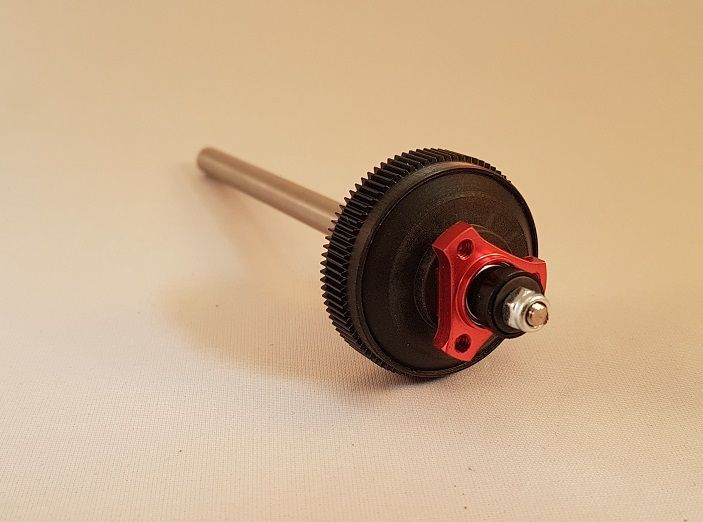
Of course, the hub is available as spare, so you might convert your actual unit to CRC.

For those interested, just send a message to CRC
While working on super thin shims, we've released some 0.2mm shims to fit the rear axle. Rear width can now be more closer to legal limit...

To match the CRC wheels, we've released a dedicated version.
Hole pattern is made according CRC instruction and thread is 4-40 unc.
Of course, the hub is available as spare, so you might convert your actual unit to CRC.
For those interested, just send a message to CRC
While working on super thin shims, we've released some 0.2mm shims to fit the rear axle. Rear width can now be more closer to legal limit...
 03-21-2018 | 12:54 PM
Tech Master
iTrader: (12)
Joined: May 2004
Posts: 1,117
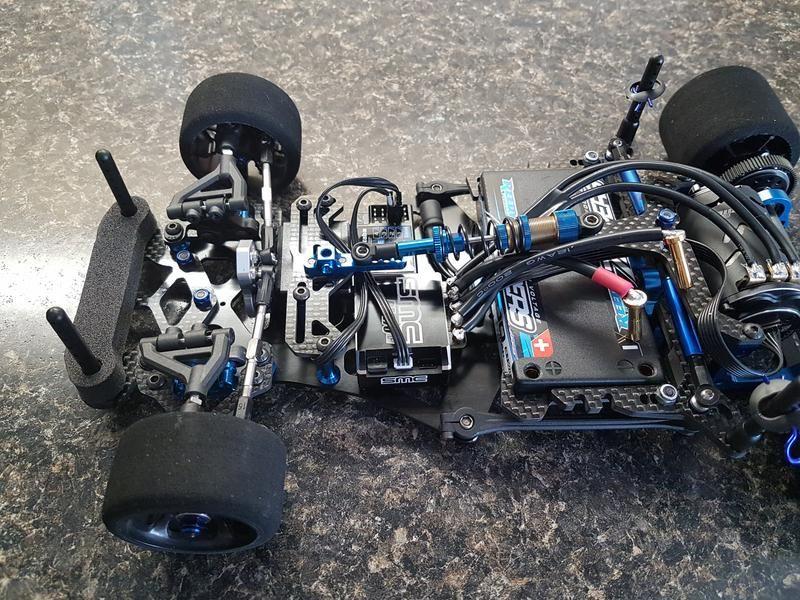
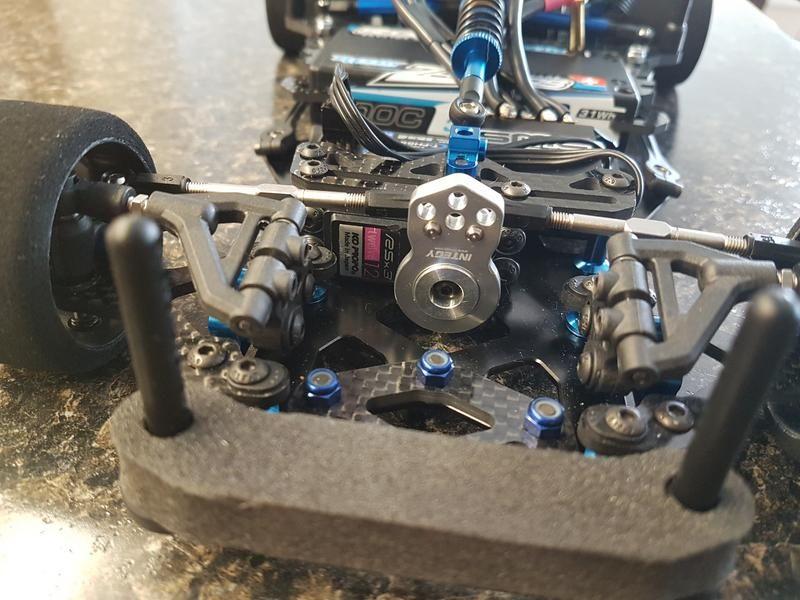
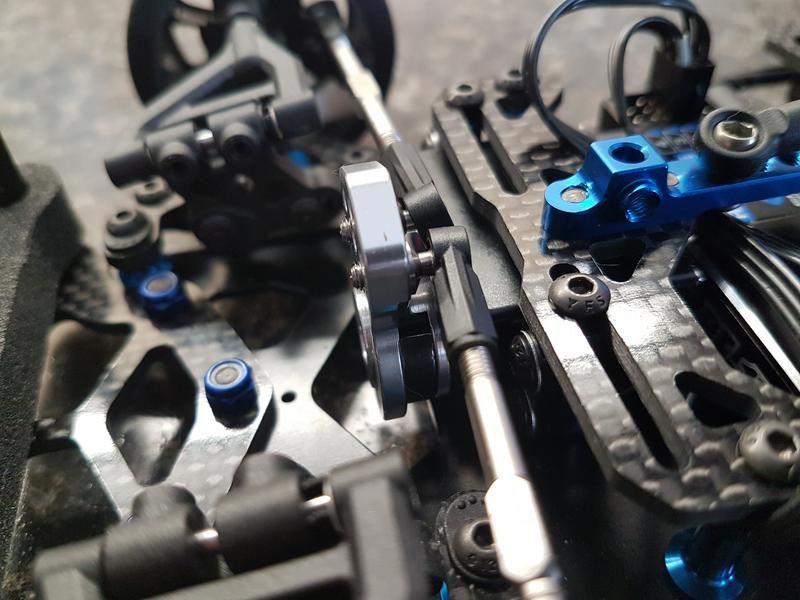
Here is the fix so far. A few extra grams for this Integy Aluminum Servo Saver I had. It's diameter is smaller in the spring and rear spline piece to fit and not have to shim up the servo plate on their posts.
03-21-2018 | 01:11 PM
Tech Addict
iTrader: (57)
Joined: Jan 2014
Posts: 607
From: Duluth MN
Off topic, but be careful if you switch batteries mid day sometime, that pack has +/- on opposite sides compared to about 90% of the other brands out there.
03-21-2018 | 04:49 PM
Tech Master
iTrader: (12)
Joined: May 2004
Posts: 1,117
03-22-2018 | 09:58 AM

Tech Regular
Joined: Feb 2009
Posts: 340
was just browsing through. the sticky up top, the reactive caster is completely wrong. This part:
-----
"More reactive caster means more overall steering, but can mean you may have to adjust your driving style to drive more ‘ahead of the car’, needing to predict where the front end will grip.
As grip increases, less reactive caster is the normal tuning change made to keep the front end of the car from gripping too hard and oversteering and prevent traction roll. Static caster adjustments are still used to change the cars on power / off power steering balance"
-----
I'd hate for people to be mistaken by this, tune wrong, and be fighting a push, or lifting inside rear tires and not know how to fix it. Basically, more reactive caster =less over all steering.
When grip comes way up, sometimes more reactive is better, as it smooths the car out, keeps the car flatter, and can reduce "hiking" as it pulls caster out as you transition into and through the center of the corner.
Caster is what jacks weight in your car and pulls cross weight out when you turn the wheel. Less caster=less weight jacking.
Maximum steering= 0dg Reactive.
These comparisons are accurate only if static caster remains the same....
Hope this helps.
-Donny
-----
"More reactive caster means more overall steering, but can mean you may have to adjust your driving style to drive more ‘ahead of the car’, needing to predict where the front end will grip.
As grip increases, less reactive caster is the normal tuning change made to keep the front end of the car from gripping too hard and oversteering and prevent traction roll. Static caster adjustments are still used to change the cars on power / off power steering balance"
-----
I'd hate for people to be mistaken by this, tune wrong, and be fighting a push, or lifting inside rear tires and not know how to fix it. Basically, more reactive caster =less over all steering.
When grip comes way up, sometimes more reactive is better, as it smooths the car out, keeps the car flatter, and can reduce "hiking" as it pulls caster out as you transition into and through the center of the corner.
Caster is what jacks weight in your car and pulls cross weight out when you turn the wheel. Less caster=less weight jacking.
Maximum steering= 0dg Reactive.
These comparisons are accurate only if static caster remains the same....
Hope this helps.
-Donny
03-22-2018 | 01:40 PM


was just browsing through. the sticky up top, the reactive caster is completely wrong. This part:
-----
"More reactive caster means more overall steering, but can mean you may have to adjust your driving style to drive more ‘ahead of the car’, needing to predict where the front end will grip.
As grip increases, less reactive caster is the normal tuning change made to keep the front end of the car from gripping too hard and oversteering and prevent traction roll. Static caster adjustments are still used to change the cars on power / off power steering balance"
-----
I'd hate for people to be mistaken by this, tune wrong, and be fighting a push, or lifting inside rear tires and not know how to fix it. Basically, more reactive caster =less over all steering.
When grip comes way up, sometimes more reactive is better, as it smooths the car out, keeps the car flatter, and can reduce "hiking" as it pulls caster out as you transition into and through the center of the corner.
Caster is what jacks weight in your car and pulls cross weight out when you turn the wheel. Less caster=less weight jacking.
Maximum steering= 0dg Reactive.
These comparisons are accurate only if static caster remains the same....
Hope this helps.
-Donny
-----
"More reactive caster means more overall steering, but can mean you may have to adjust your driving style to drive more ‘ahead of the car’, needing to predict where the front end will grip.
As grip increases, less reactive caster is the normal tuning change made to keep the front end of the car from gripping too hard and oversteering and prevent traction roll. Static caster adjustments are still used to change the cars on power / off power steering balance"
-----
I'd hate for people to be mistaken by this, tune wrong, and be fighting a push, or lifting inside rear tires and not know how to fix it. Basically, more reactive caster =less over all steering.
When grip comes way up, sometimes more reactive is better, as it smooths the car out, keeps the car flatter, and can reduce "hiking" as it pulls caster out as you transition into and through the center of the corner.
Caster is what jacks weight in your car and pulls cross weight out when you turn the wheel. Less caster=less weight jacking.
Maximum steering= 0dg Reactive.
These comparisons are accurate only if static caster remains the same....
Hope this helps.
-Donny
In the times I messed with reactive it seemed to change the steering of the car considerably compared to running 0 reactive, with a considerable 'hook' in the corner, but it may have been caused by other factors.
03-26-2018 | 10:14 AM
Joined: Dec 2011
Posts: 3,298
From: Raleigh, North Carolina
So I'm hearing guys state that a spool setup can be ran with softer suspension settings... My question is, we're already pretty soft on black CRC carpet so what exactly is going softer on the suspension settings, center spring? oils? front or side springs? Not sure I understand why a spool would allow an even softer setting? I don't find a spool much if any twitchier than a normal high grip setup, so not sure what softening would do...
 03-28-2018 | 03:19 PM

So I'm hearing guys state that a spool setup can be ran with softer suspension settings... My question is, we're already pretty soft on black CRC carpet so what exactly is going softer on the suspension settings, center spring? oils? front or side springs? Not sure I understand why a spool would allow an even softer setting? I don't find a spool much if any twitchier than a normal high grip setup, so not sure what softening would do...
03-29-2018 | 05:05 AM
Joined: Dec 2011
Posts: 3,298
From: Raleigh, North Carolina
Ah. Great explanation Gubbs, thanks!
I noticed the same under steer with mine, but I just dialed in a touch of dual rate.
However, now you got me thinking about an even softer center spring setup that I’m already at to make the weight transfer help the steering and pull the dual rate back out.
It’ll probably help with corner speed. I’m already roughly the same as you on the other springs and damper tubes.
I noticed the same under steer with mine, but I just dialed in a touch of dual rate.
However, now you got me thinking about an even softer center spring setup that I’m already at to make the weight transfer help the steering and pull the dual rate back out.
It’ll probably help with corner speed. I’m already roughly the same as you on the other springs and damper tubes.
 03-30-2018 | 07:58 PM
This is something I've been trying. The shoulder screws let the spur have a little wiggle so the mesh aligns properly under power. Some of the lockers have been really noisy and this tames the noise significantly. And for the record, a very tight diff and one that's locked is not the same!
03-31-2018 | 04:57 AM
Joined: Dec 2011
Posts: 3,298
From: Raleigh, North Carolina
Jason- on crc Black spools to me feel great no diff out, seems to come out of corner faster.
I’m about 2- 3/10s faster with a spool than a diff in certain high grip conditions.
I’m about 2- 3/10s faster with a spool than a diff in certain high grip conditions.
Last edited by Antimullet; 03-31-2018 at 06:14 AM.