


 1188Likes
wtcc's TT-02 KR
 02-12-2024 | 01:38 AM
#721



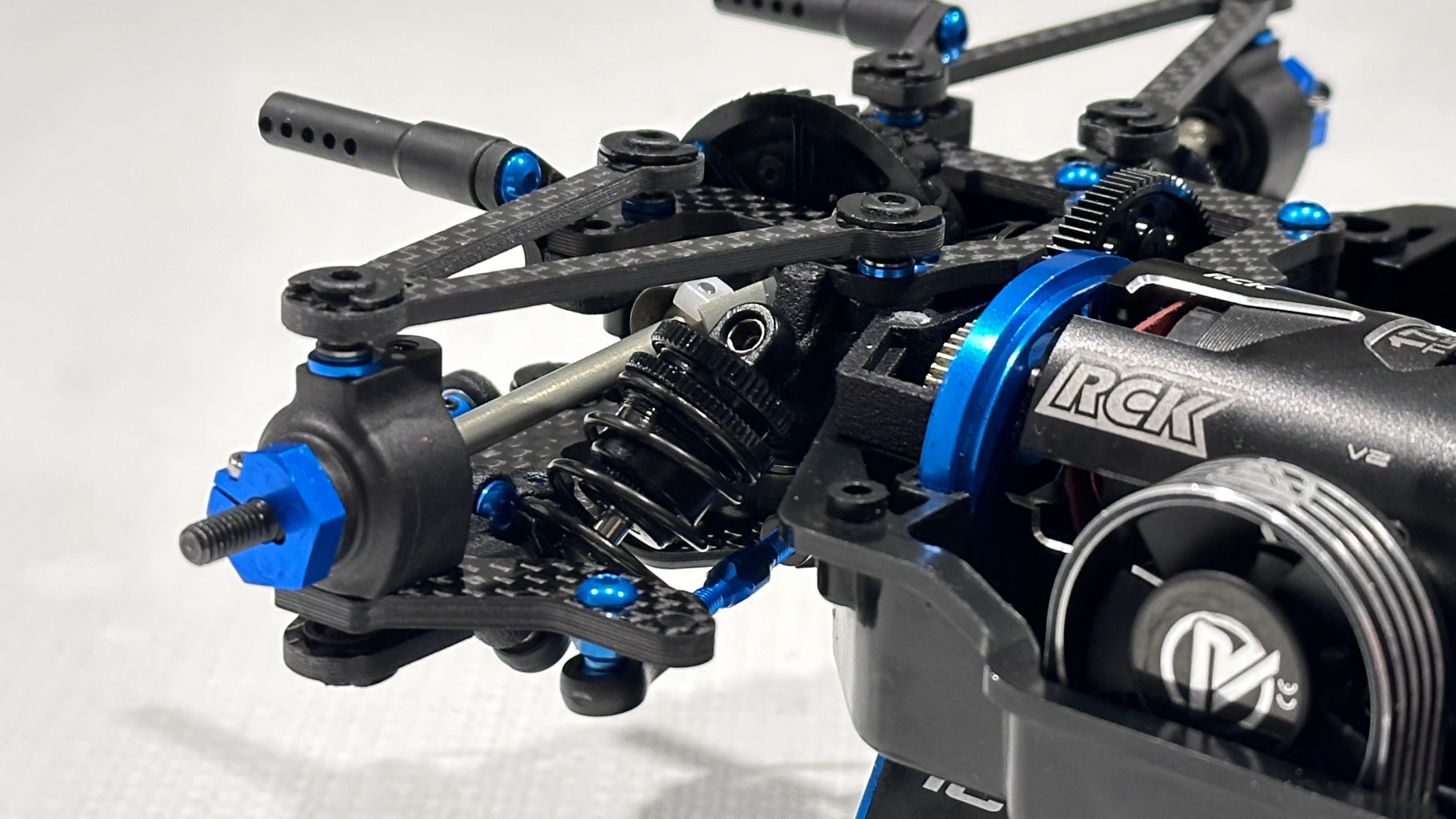
Now to the changes in the middle. With my new weights layout, I moved the battery close to the prop shaft. This made a relocation of the upper mounts necessary . I also added claws to the ends, so I don’t need to glue a piece of foam to the chassis wall:
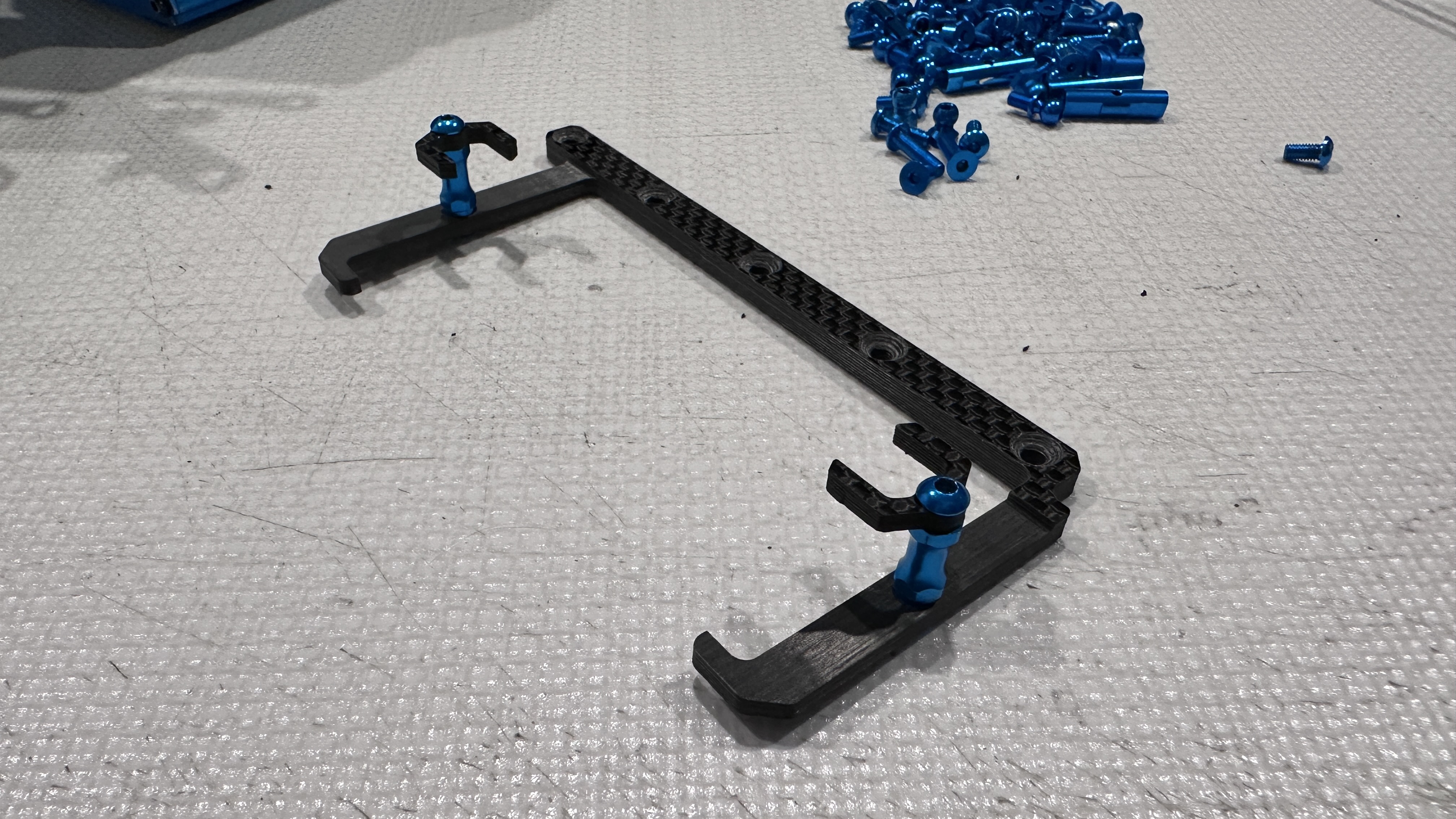

And while at it I exchanged the aluminum prop shaft as well, as it was ligthly bend.
For the rear upper plate it was pretty much the same work as in front. Exchanging the ballstuds, checking the proper shimming of the ball bearings, adding the thumbscrews for the shocks:
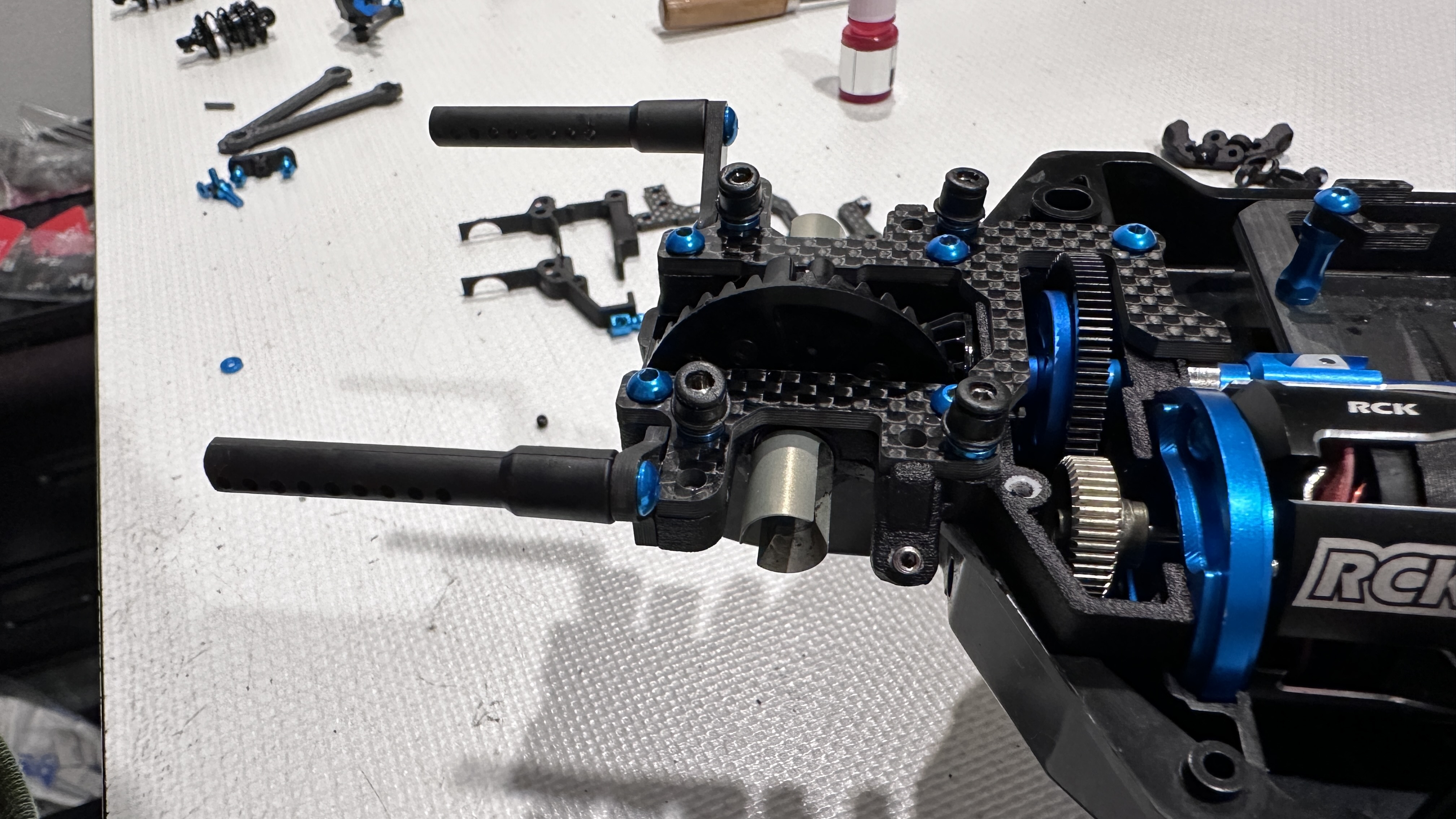
New is the mounting concept of the rear body post plates via one screw and a pin from the topplate. Unfortunately this pin didn’t fit in the hole as planned. I removed a bit of material from the upper side until it fit:
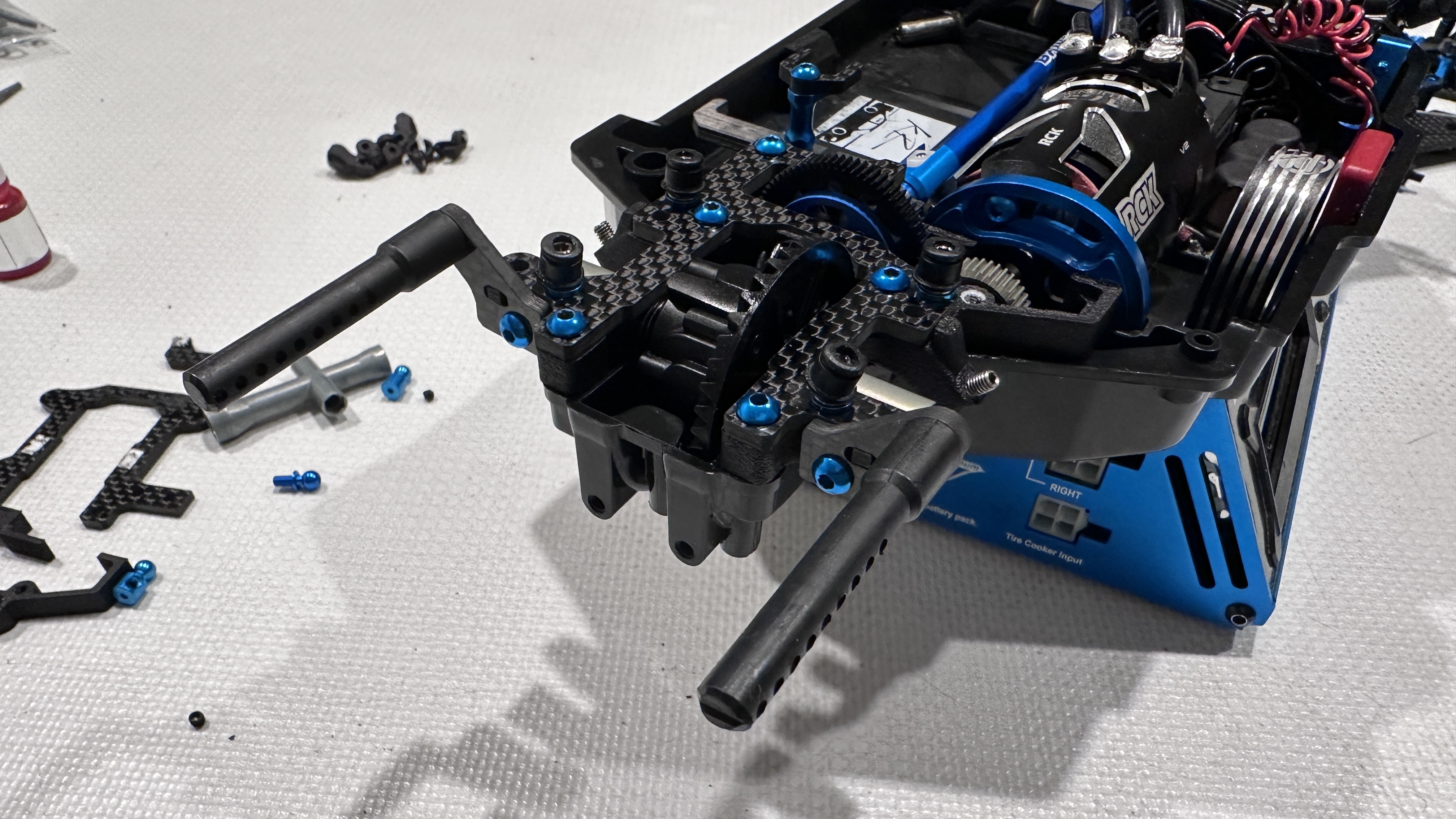
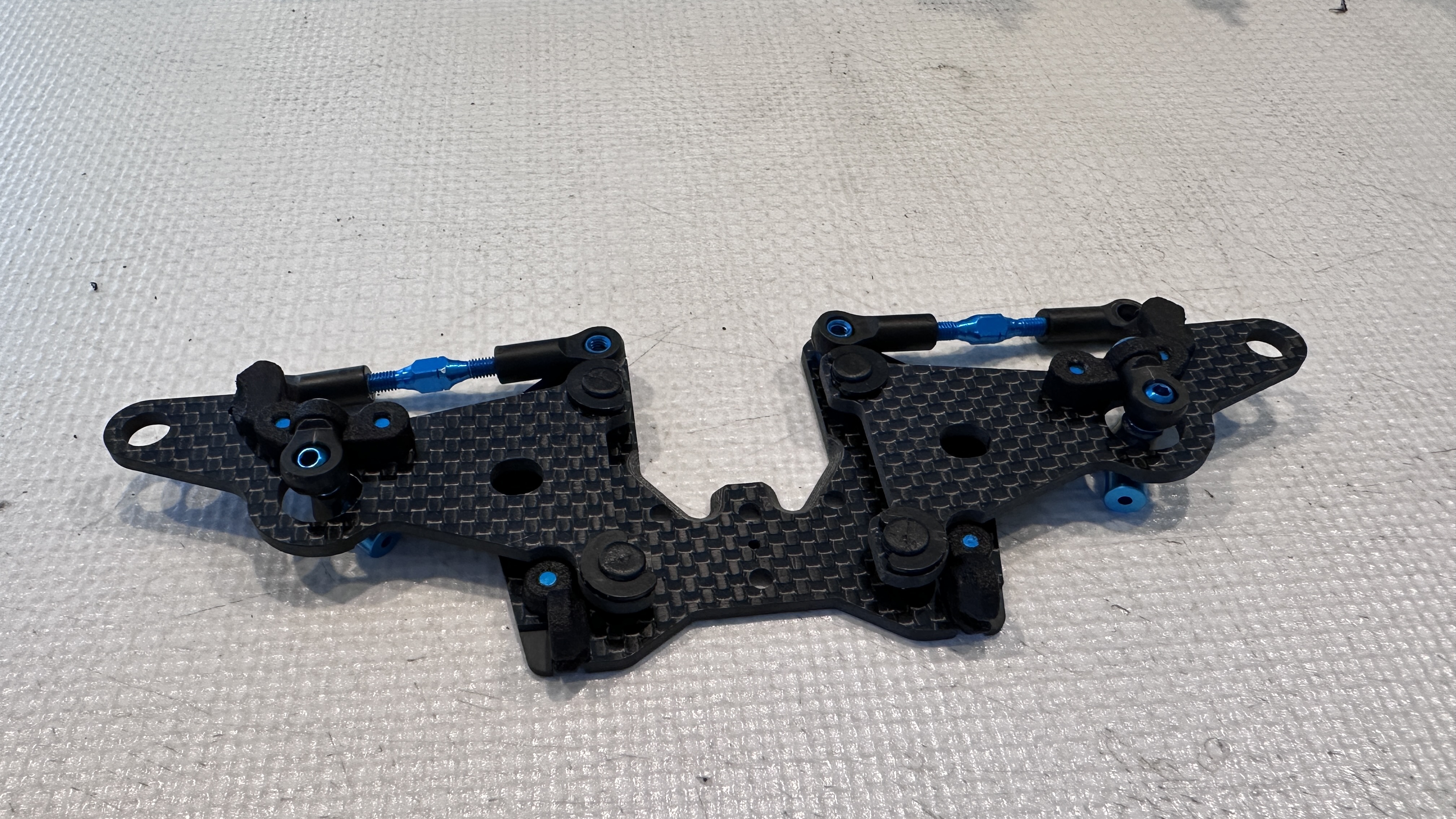
The rear droopplate has compared to the front, two different features. One are the split arb mounts:

...and two are the active-toe-link ballnuts:
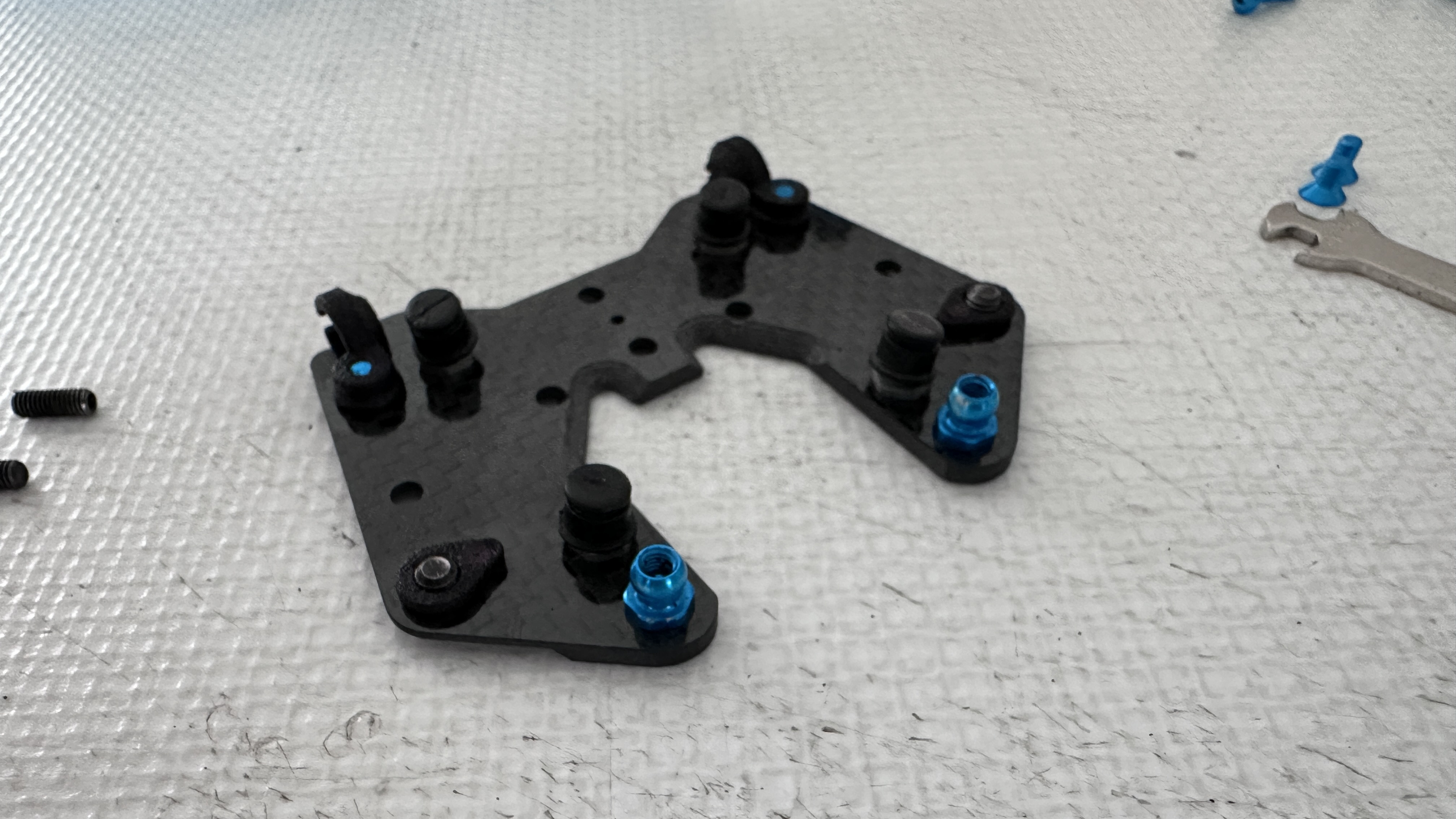
In this picture I have already added the arm mounts and droop screws.
Putting in the arms is generally no problem. It can occur though, that they sit tight on new ball cups. If so take a round file and remove a whee bit of material step by step until it is perfect. On my old and worn ballcups I experienced both tight and loose situations. For the latter you can put on a film of crazy glue into the ring, let it fully dry and then check again

In the picture the distance for the toe-links for 2.5 degree toe-in.
It was time to complete the arm assembly with the arb-damper-mounts. Again preparing four ballcups as described above and shorten two ballstud-threads to 3mm:
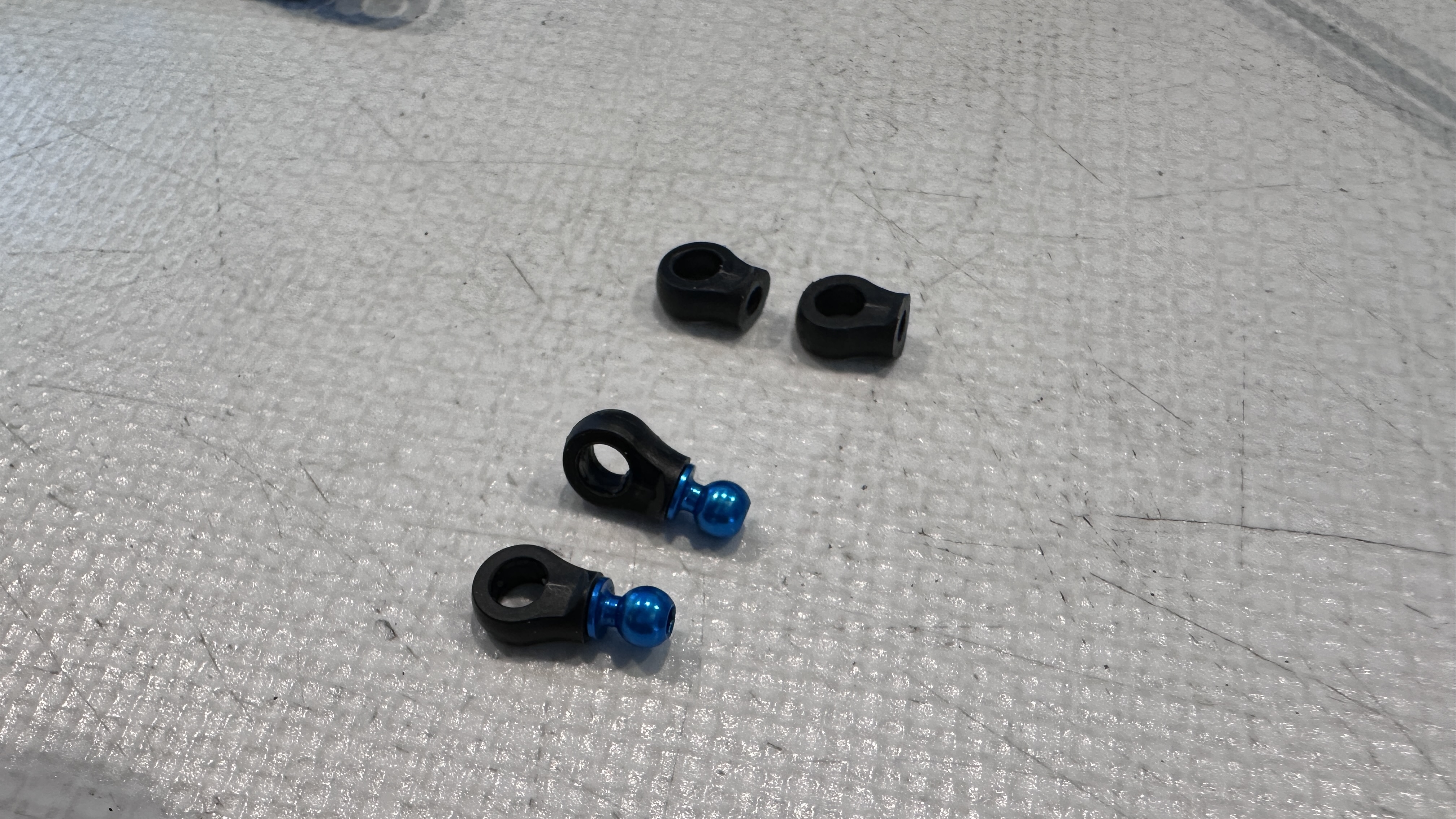
Then put the parts together like shown and attach the ballstud to the mount:
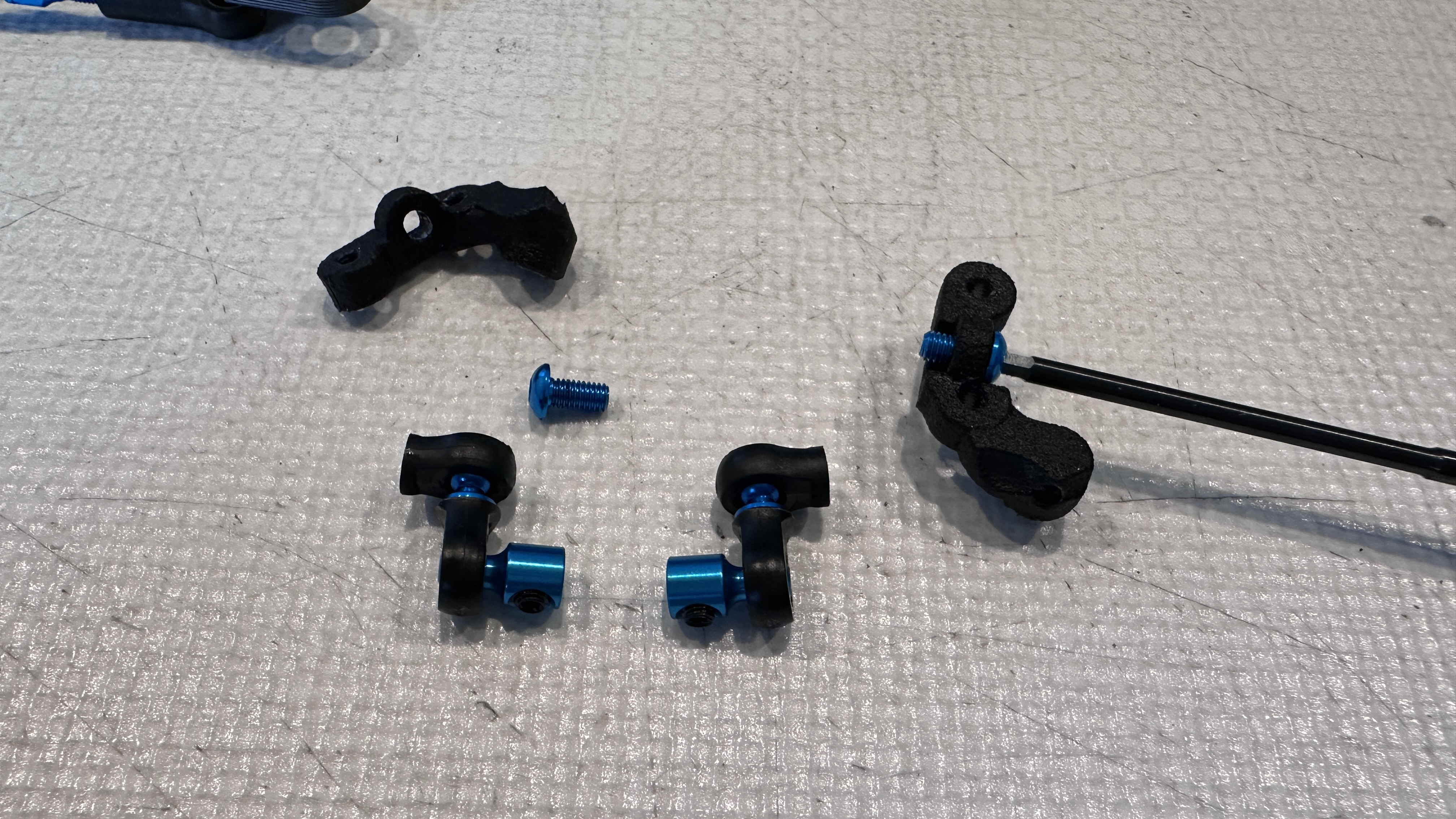
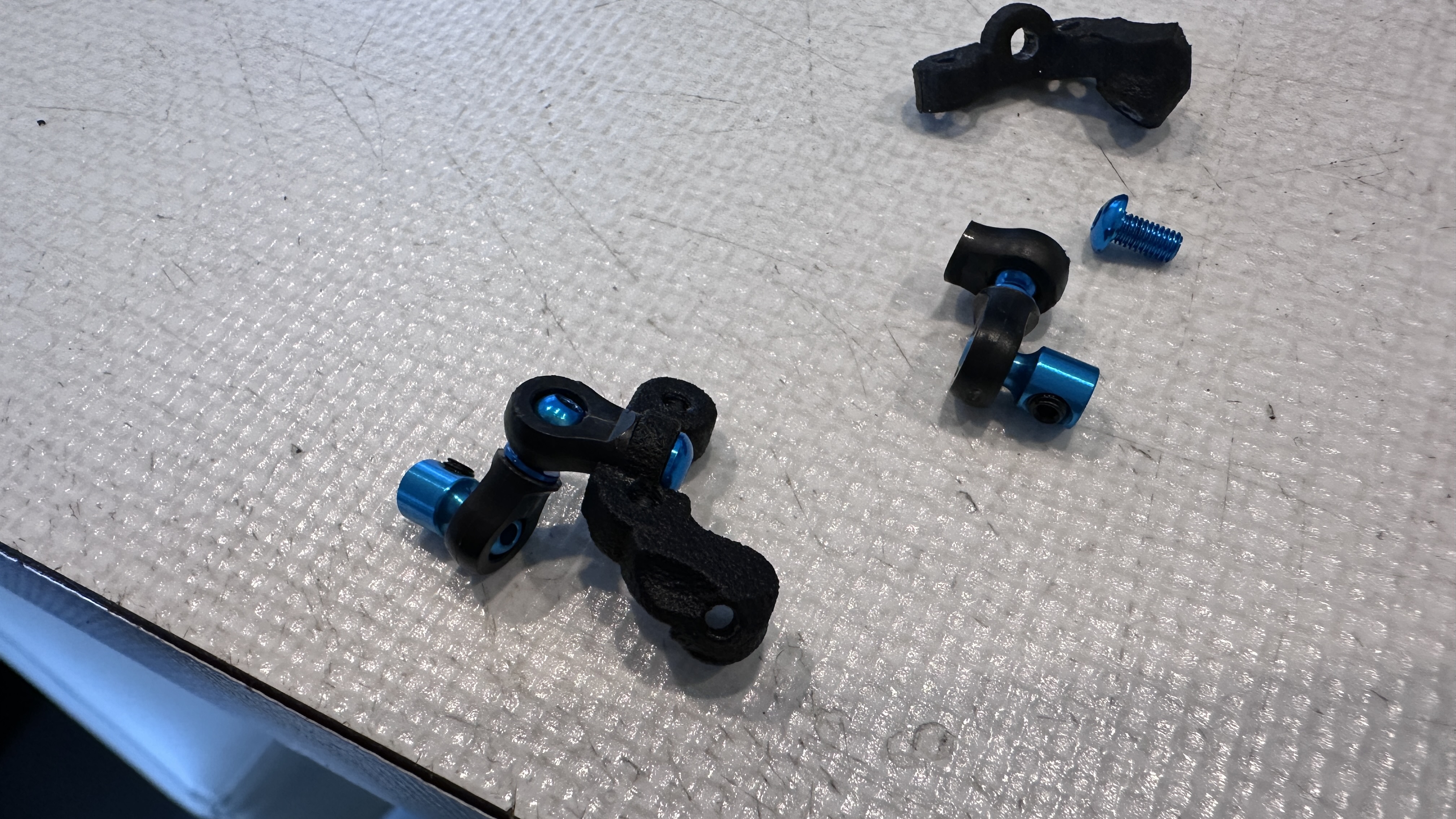
Rear anti-roll-bar bend and added:


The whole unit attached to the tub and dampers installed:


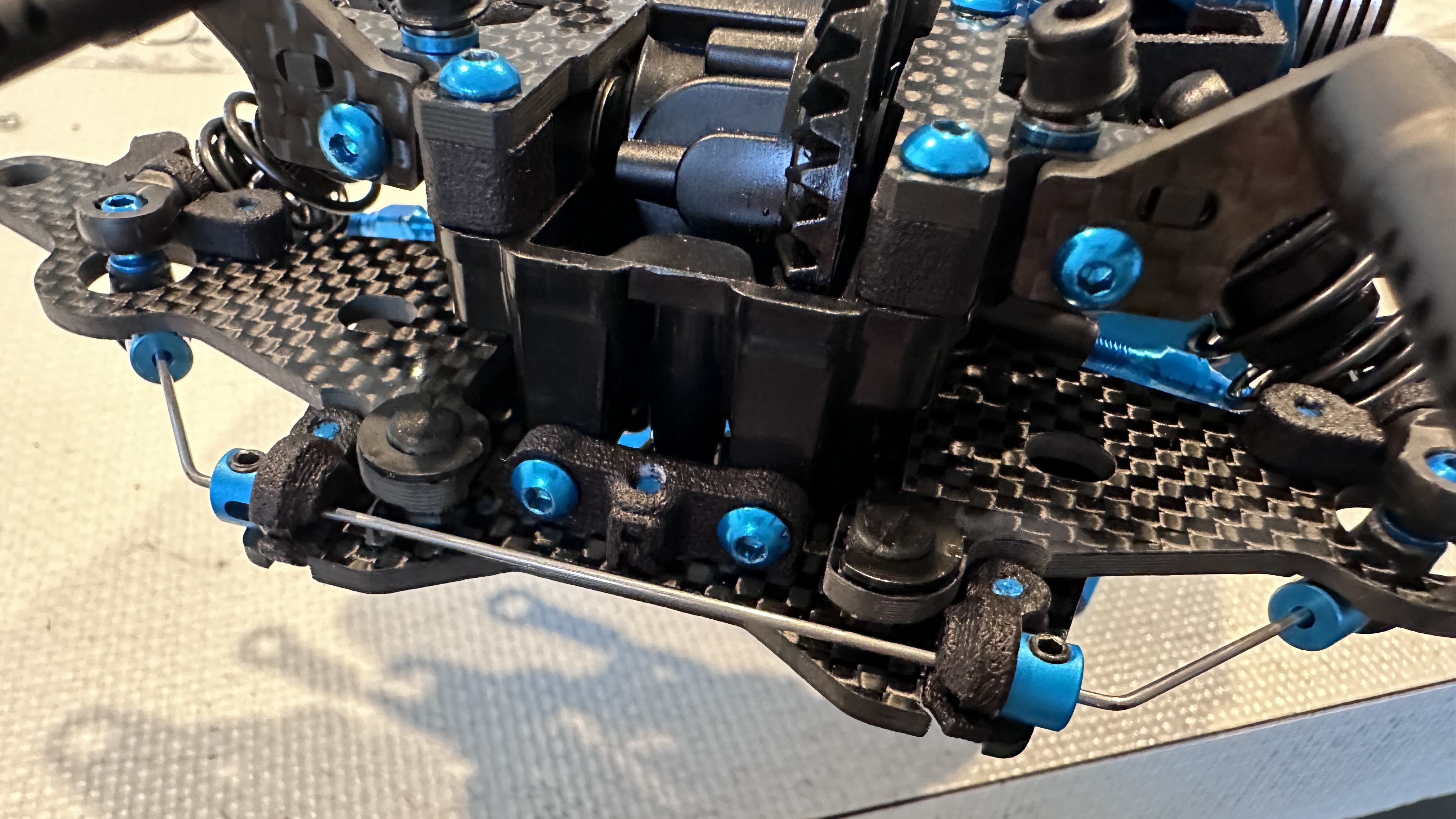
And then I realized, that I cannot install the droop plate support with the arb installed Luckily it is just two screws to remove the arb-mount:
... to be continued.
And while at it I exchanged the aluminum prop shaft as well, as it was ligthly bend.
For the rear upper plate it was pretty much the same work as in front. Exchanging the ballstuds, checking the proper shimming of the ball bearings, adding the thumbscrews for the shocks:
New is the mounting concept of the rear body post plates via one screw and a pin from the topplate. Unfortunately this pin didn’t fit in the hole as planned. I removed a bit of material from the upper side until it fit:
The rear droopplate has compared to the front, two different features. One are the split arb mounts:
...and two are the active-toe-link ballnuts:
In this picture I have already added the arm mounts and droop screws.
Putting in the arms is generally no problem. It can occur though, that they sit tight on new ball cups. If so take a round file and remove a whee bit of material step by step until it is perfect. On my old and worn ballcups I experienced both tight and loose situations. For the latter you can put on a film of crazy glue into the ring, let it fully dry and then check again
In the picture the distance for the toe-links for 2.5 degree toe-in.
It was time to complete the arm assembly with the arb-damper-mounts. Again preparing four ballcups as described above and shorten two ballstud-threads to 3mm:
Then put the parts together like shown and attach the ballstud to the mount:
Rear anti-roll-bar bend and added:
The whole unit attached to the tub and dampers installed:
And then I realized, that I cannot install the droop plate support with the arb installed
Luckily it is just two screws to remove the arb-mount:... to be continued.
 02-15-2024 | 11:08 AM
#722
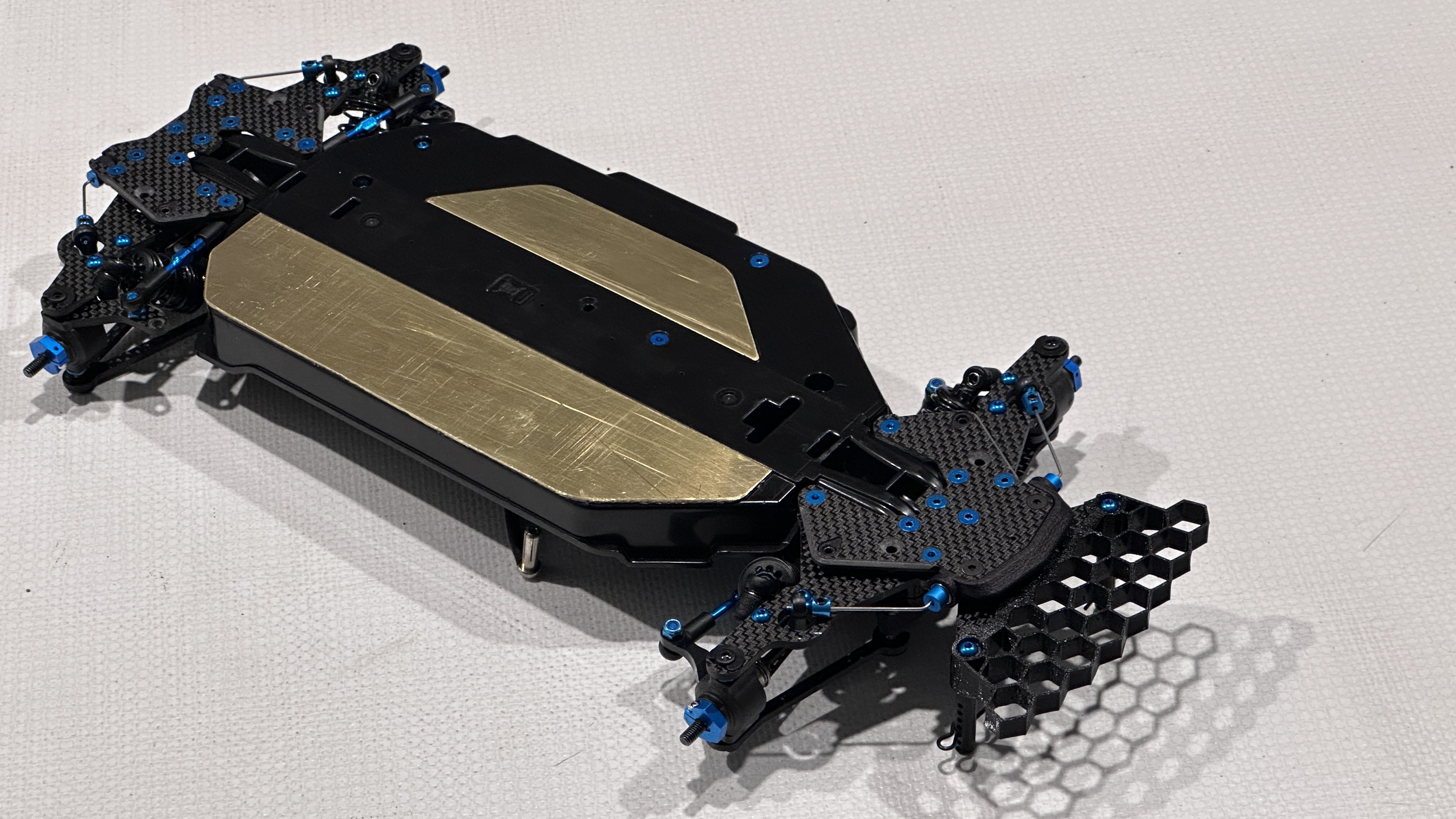
Last step’s before completion.
The rear hubs got the new toe-plates:

These are generously chamfered for more suspension angle.
Only the upper arms left to add:
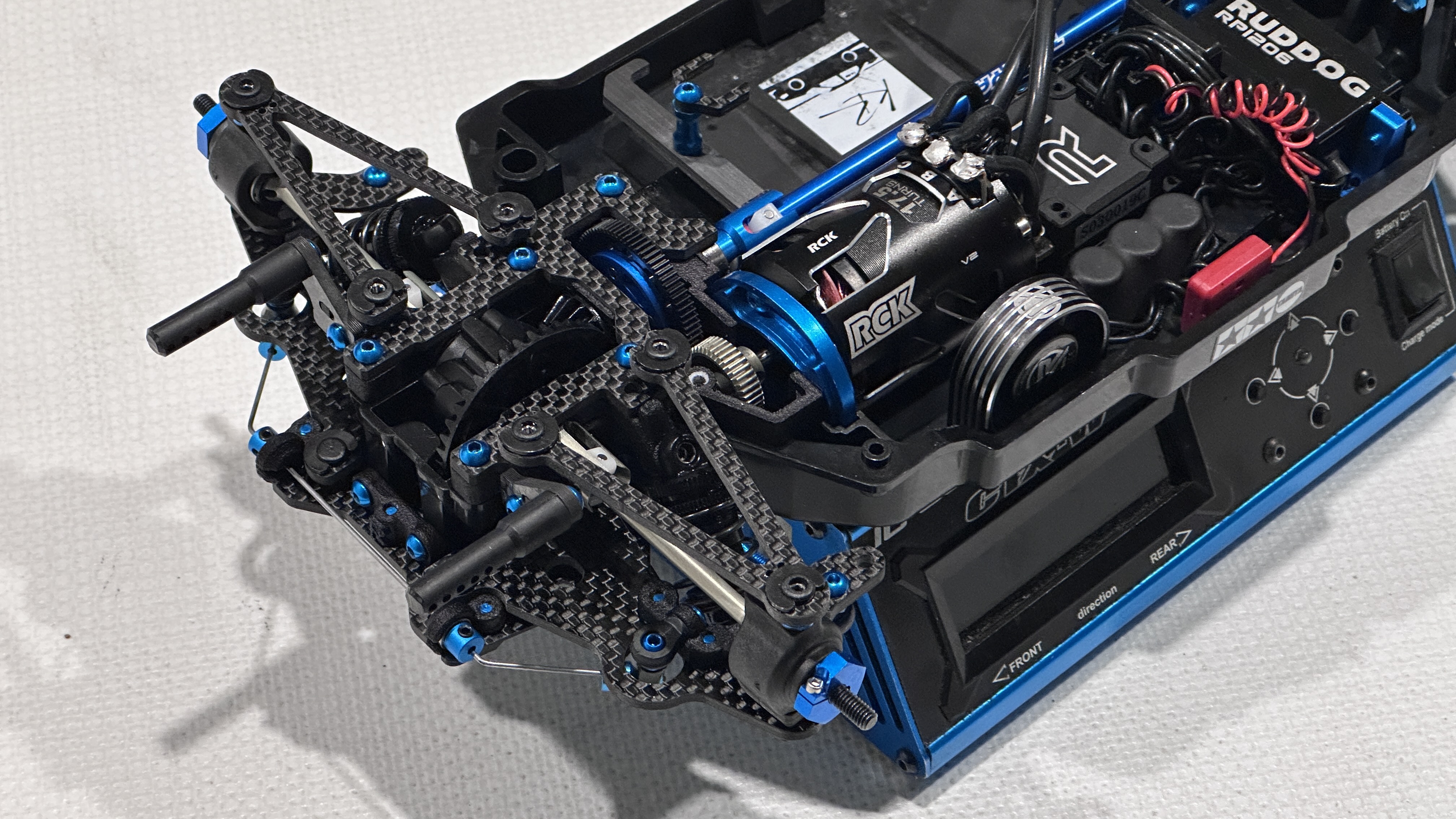
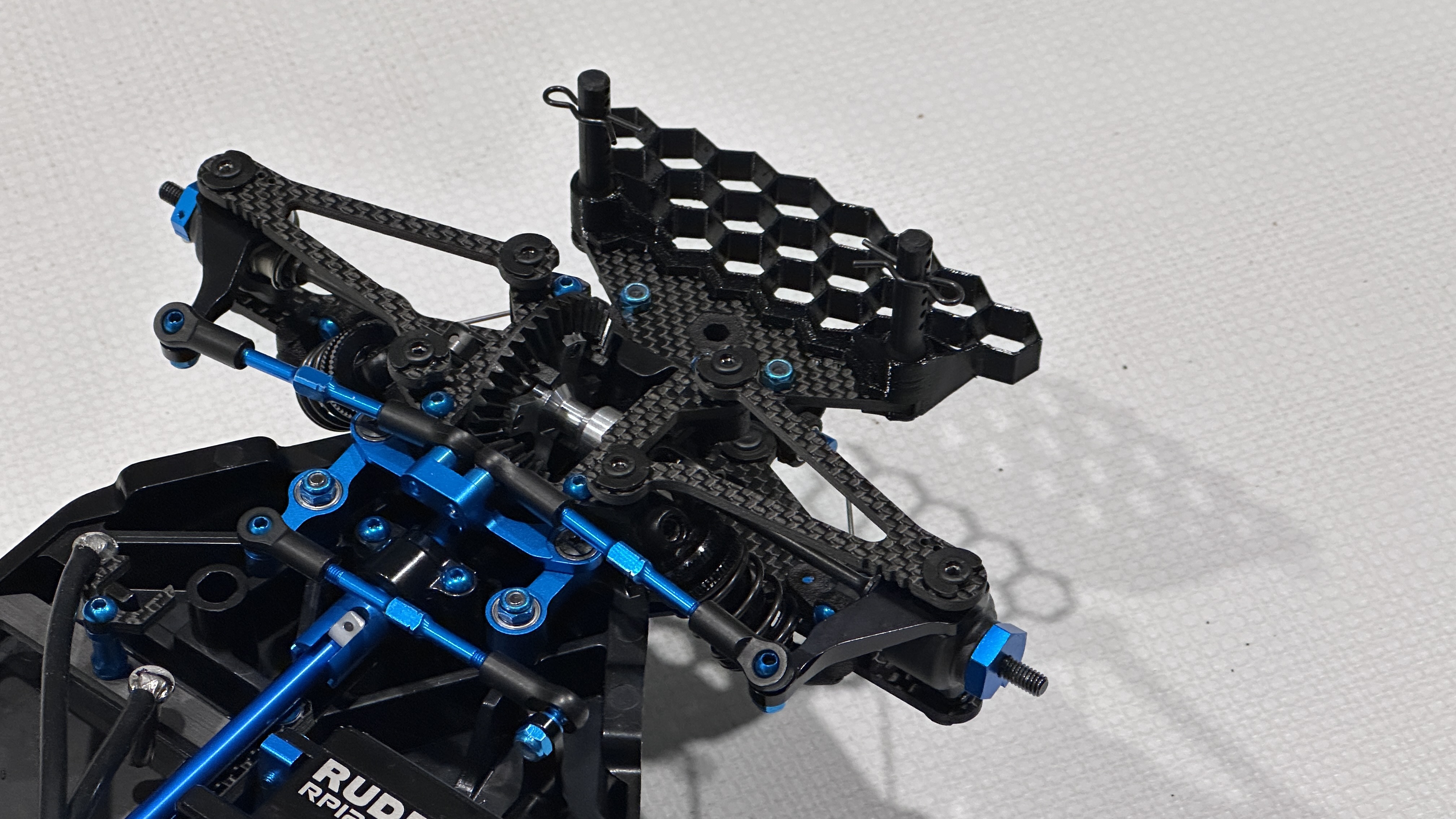
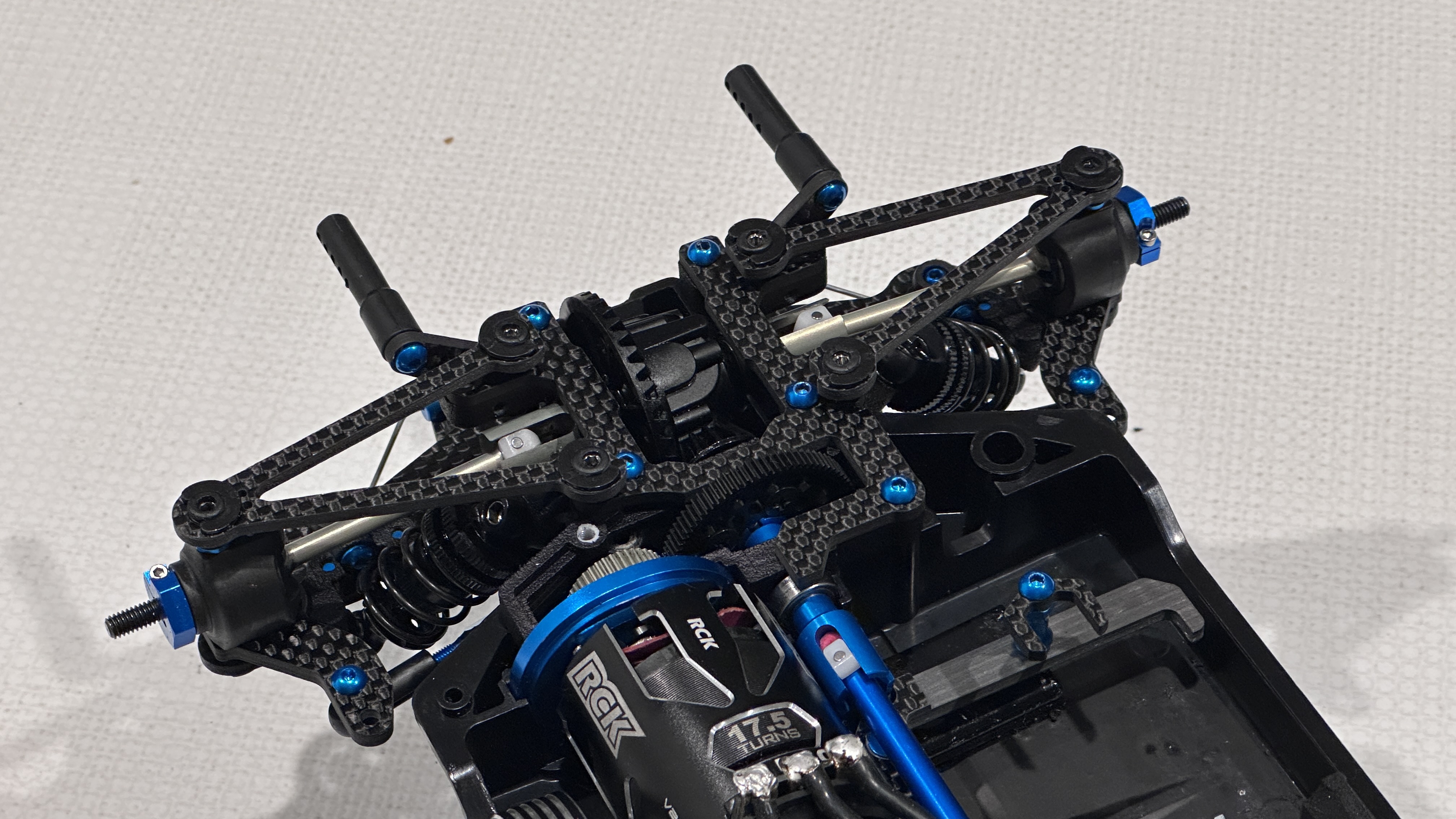
And that’s it. The new v5.1:


The rear hubs got the new toe-plates:
These are generously chamfered for more suspension angle.
Only the upper arms left to add:
And that’s it. The new v5.1:
02-19-2024 | 01:20 PM
#723
Tech Apprentice
Joined: Feb 2010
Posts: 56
On the xray hubs it looks like you have fitted the suspension ball joints to the wrong holes. I.e you've used the outer holes rather than the inner.
At the rear that probably won't matter but at the front the steering axis won't line up with the centre of the driveshaft joint. What that will do is cause the inboard end of the driveshaft to move in and out as you steer. The steering may bind under power or braking due to friction with the outdrive.
I'd be curious as to whether you notice any issues in practice
At the rear that probably won't matter but at the front the steering axis won't line up with the centre of the driveshaft joint. What that will do is cause the inboard end of the driveshaft to move in and out as you steer. The steering may bind under power or braking due to friction with the outdrive.
I'd be curious as to whether you notice any issues in practice
02-19-2024 | 02:12 PM
#724
tortoise 1 It is all on purpose and I run it without issues for years now. I have no trouble with binding, just need to use the right length cardan, because the blade will move inside the outdrives under steering and I don’t want it to slip out.
I get, that it should induce some unwanted forces into the steering and front suspension, but do not notice anything on track or any influence on drivetrain or steering action. I suppose the angles are not great enough on the doublejointcardan to have a noticeable effect.
I get, that it should induce some unwanted forces into the steering and front suspension, but do not notice anything on track or any influence on drivetrain or steering action. I suppose the angles are not great enough on the doublejointcardan to have a noticeable effect.
 02-20-2024 | 05:54 AM
#726
Tech Apprentice
Joined: Feb 2010
Posts: 56
Glad to hear it works.
If you are using the xray steering arms another thing that occurs to me is that using the outer holes on the hubs must increase the ackerman a lot.
The xray in standard form already has a lot of ackerman. On my x4f I used to run as many spacers as I could on the steering rack in order to reduce it.
If you are using the xray steering arms another thing that occurs to me is that using the outer holes on the hubs must increase the ackerman a lot.
The xray in standard form already has a lot of ackerman. On my x4f I used to run as many spacers as I could on the steering rack in order to reduce it.
02-20-2024 | 11:14 AM
#727

tortoise 1 It is all on purpose and I run it without issues for years now. I have no trouble with binding, just need to use the right length cardan, because the blade will move inside the outdrives under steering and I don’t want it to slip out.
I get, that it should induce some unwanted forces into the steering and front suspension, but do not notice anything on track or any influence on drivetrain or steering action. I suppose the angles are not great enough on the doublejointcardan to have a noticeable effect.
I get, that it should induce some unwanted forces into the steering and front suspension, but do not notice anything on track or any influence on drivetrain or steering action. I suppose the angles are not great enough on the doublejointcardan to have a noticeable effect.
Currently Active Users Viewing This Thread: 1 (0 members and 1 guests)
