Originally Posted by
MaxRain
How good is your dyno?
This is a test result of a R1 v21 21.5 under load set at 41 degrees timing with a motor analyzer...
Tell me what do you see?
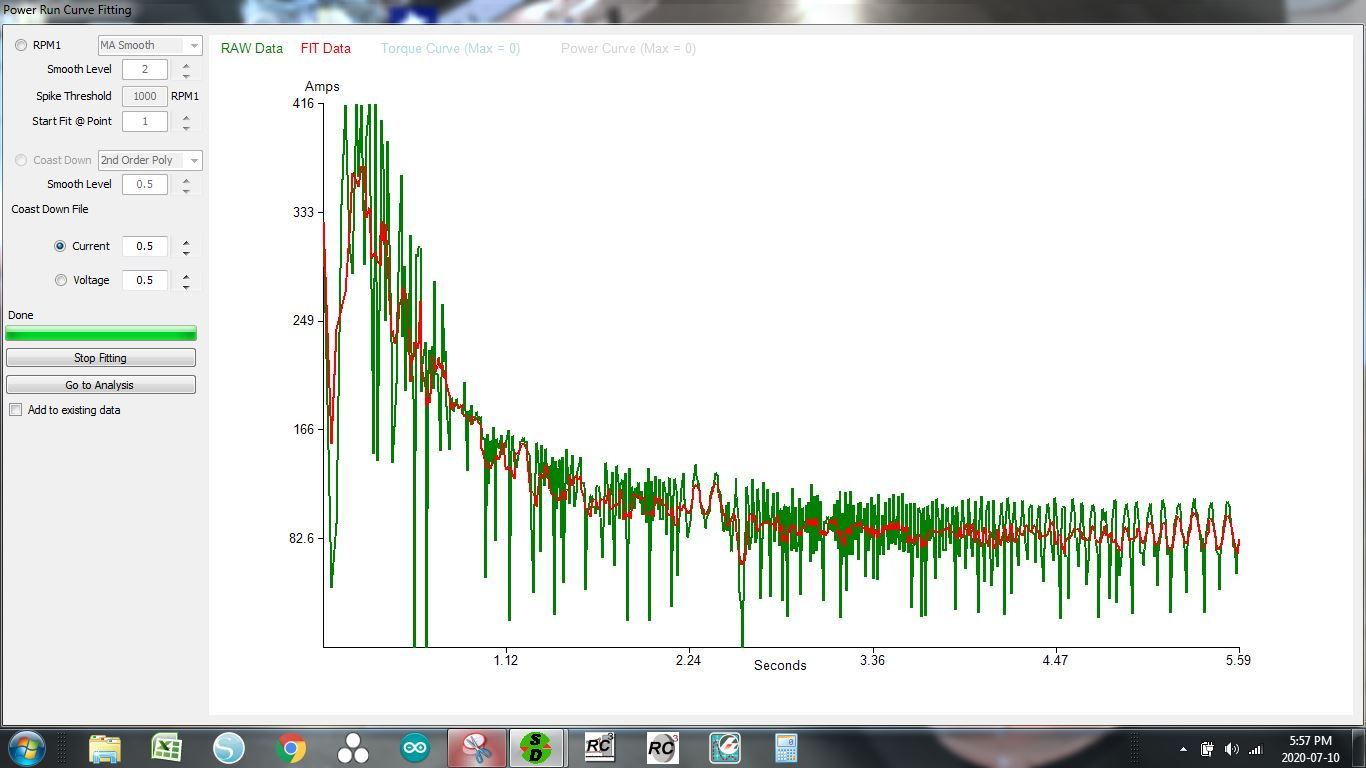

Further to this post, I have additional slides to help explain why I asked anyone if they can tell me what they see...
The graphs above contain some interesting details on the performance of the motor that I own.
In the two graphs, you can see the length of time the motor need to spool up to reach maximum RPM. The timing on the motor for this test was set at 41 degrees, measured with a motor analyzer. There are two pieces of info that stand out in the graphs.. The first is what you see on the current (amp draw) graph, just after 2.24 seconds, you see a dip in the current and if you use your mouse cursor if using a computer, line it up with that spot and then scroll without moving it. The same spot on the RPM graph could be interpreted as the start of the power band, up until the motor starts to cog, which you can clearly see at the end of the current graph.
Now the next graph is the voltage, which for this test the lipo I have was at storage voltage 7.6v re-peaked with icharger.

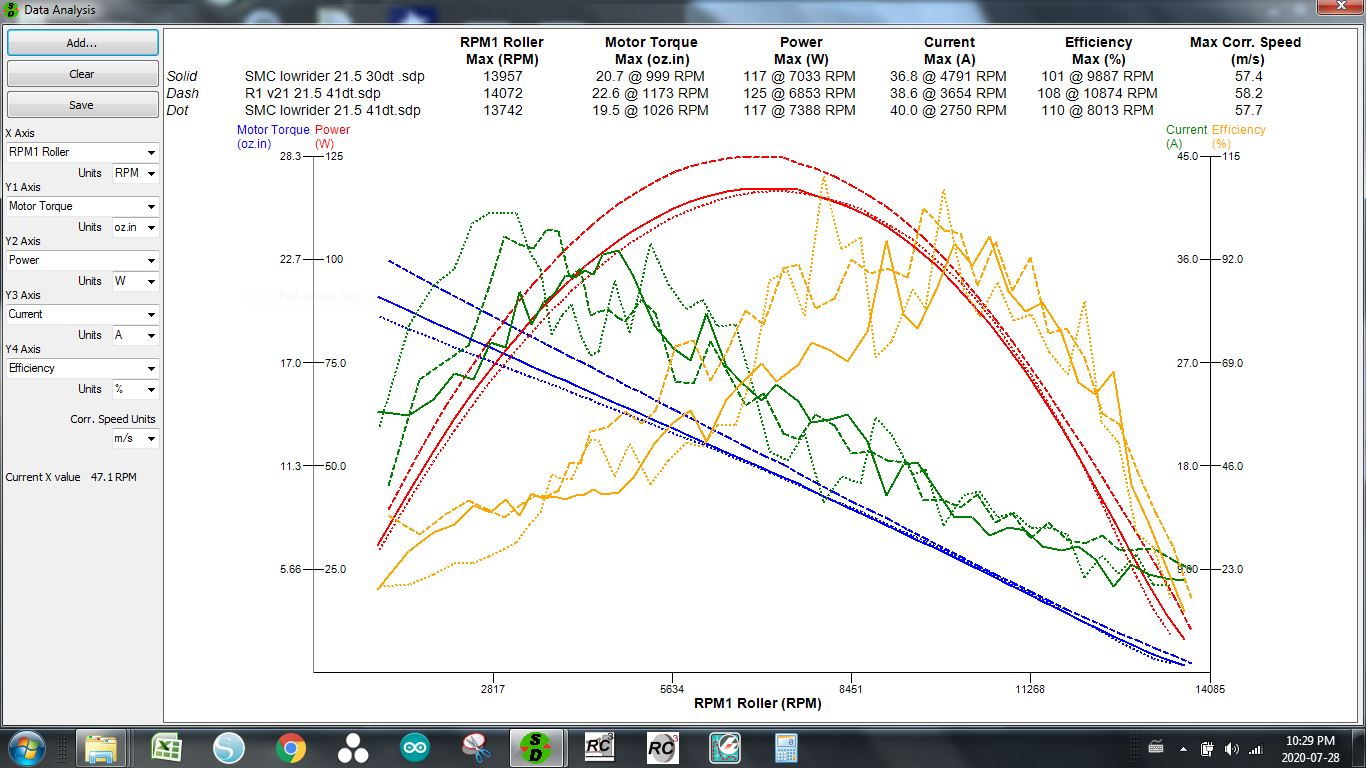
Then torque, power, efficiency and current all over RPM.
In this graph you can see lots of good details, and with a 1:1 ratio, the RPM can be match to with data loggers to ensure you select the best gearing for your layout..
Now does the setting of 41 degrees create the best torque and overall power? Not sure as I need to do more testing to validate this. However as Bry195 mentioned before, "as you increase timing, you are field weakening", which is also known as widening the power. However when it comes to spec racing, you need to find the setting that produces the torque and power that the motor can produce before it starts to generate too much heat. Remember that as you widen the power band, and depending on the track layout you have in front of you should also influence what setting you select. If grip is high, its a no brainer, torque.

Lastly here is a comparison of two motors, with one motor at two different timing settings. You can see the field weakening that happens when you go from 30 to 41 degrees timing for the motor.
For those who are interested in seeing the field weakening results of the R1 v21, I will be posting the results soon on my Facebook page.